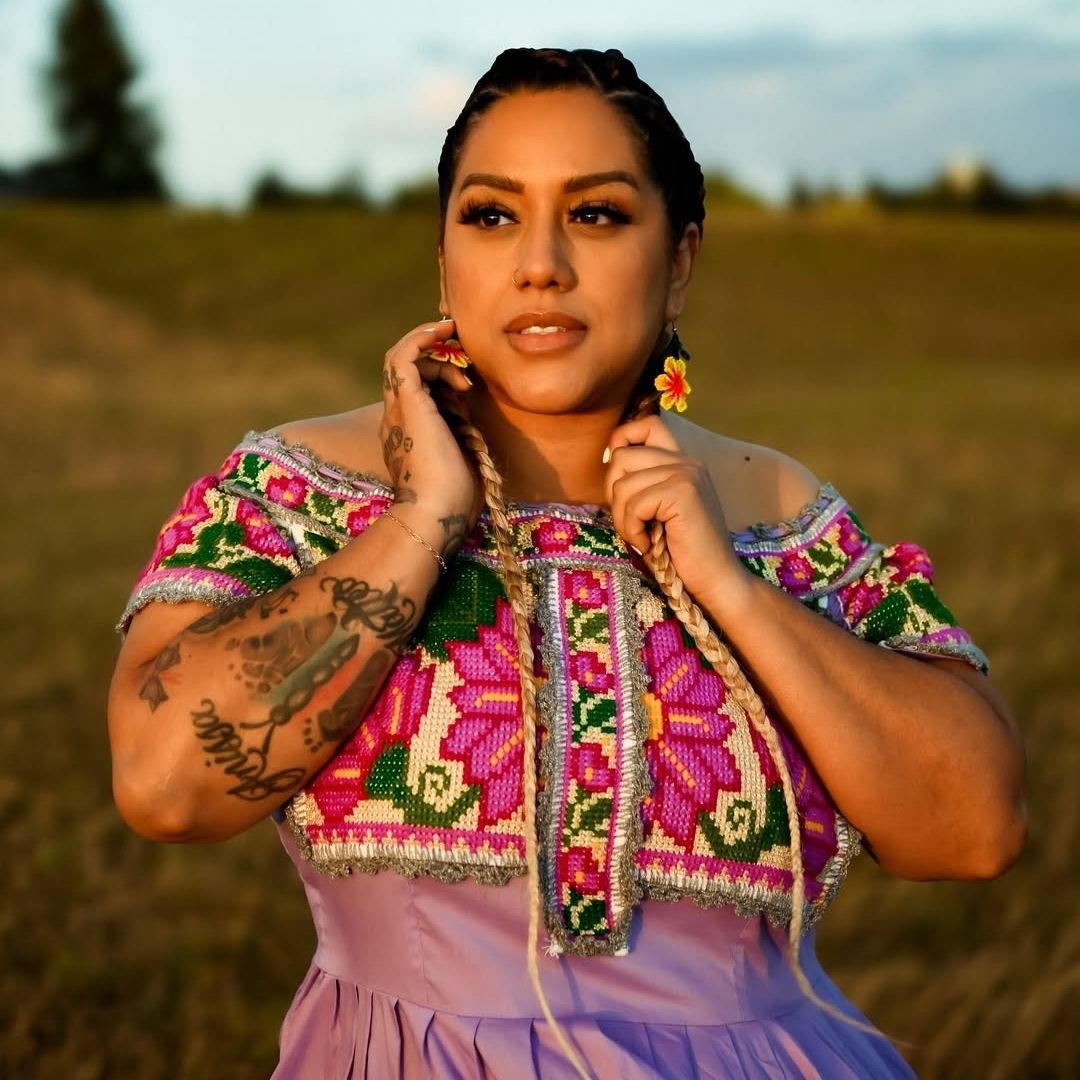
While it may seem far off, the strain between Indigenous identity and colonial erasure continues today — in language, land, and especially in beauty. What does reclamation look like? Is it necessary?
How can the indigenous communities regain their strengths through honoring their past, and celebrating modern beauty standards? There’s an evolution to be explored, and it speaks to the ongoing strength and resilience of indigenous identity. How do these ancient rituals speak to the continued fight for recognition and justice — beyond campaign aesthetics? Who’s reclaiming in an authentic way that honors their ancestors?
War Paint: Spiritual Symbolism vs. Pop Culture
So, what comes to mind when you think of war paint? War paint is defined as “paint put on parts of the body (such as the face) by American Indians as a sign of going to war” by Miriam Webster. What that definition lacks? Perspective. Nuance. Spirituality.
The definition misses the holistic perspective of Indigenous people. Colonized definitions segment. Indigenous definitions are integral. To Western eyes, face paint may seem ornamental. But to the wearers? It is medicine: the story of grief, power, and hope.
While the significance varies across tribes, colors carry meaning. For example, black for strength. Yellow for intellect. Red for sacrifice or love. White for mourning. Blue for wisdom. Application isn’t mere decoration. It’s a rite. A role. A readiness. And these rituals are not relics. They live on; reclaimed through activism, art, and even commercial beauty. To ground this conversation in lived experience, I spoke with Cece Meadows, founder and CEO of Prados Beauty.
Bridging the Gap Between Tradition And Commercialization
Rea Lowery: Let’s talk about definitions. What does beauty mean to you as an Indigenous woman and entrepreneur?
Cece Meadows: Beauty, to me, is ceremony. It’s not just what we put on our faces — it’s who we are, where we come from, and how we carry ourselves. As an Indigenous woman, beauty is ancestral. It’s rooted in culture, storytelling, land, and legacy. It’s the strength of our grandmothers, the songs of our languages, the lines in our regalia, and the pride in our brown skin.
As an entrepreneur, beauty is also power. It’s how we reclaim space in industries that were never built for us, and how we shift the narrative from being seen as trends to being respected as originators. Through Prados Beauty, I get to redefine beauty — not as something we conform to, but as something we create on our own terms.
To me, true beauty is inclusive, liberating, and sacred. It exists in diversity, in community, and in the freedom to be your full self — unapologetically.
Lowery: I love that perspective. You’ve described beauty as a tool for healing and reclaiming identity. How does that show up in your work with Prados?
Meadows: For me, beauty has always been about more than makeup — it’s about remembering who we are and where we come from. As Indigenous people, so much of our identity has been erased, commodified, or misunderstood. Prados is my way of reclaiming that narrative and offering a space for healing — through color, design, and representation.
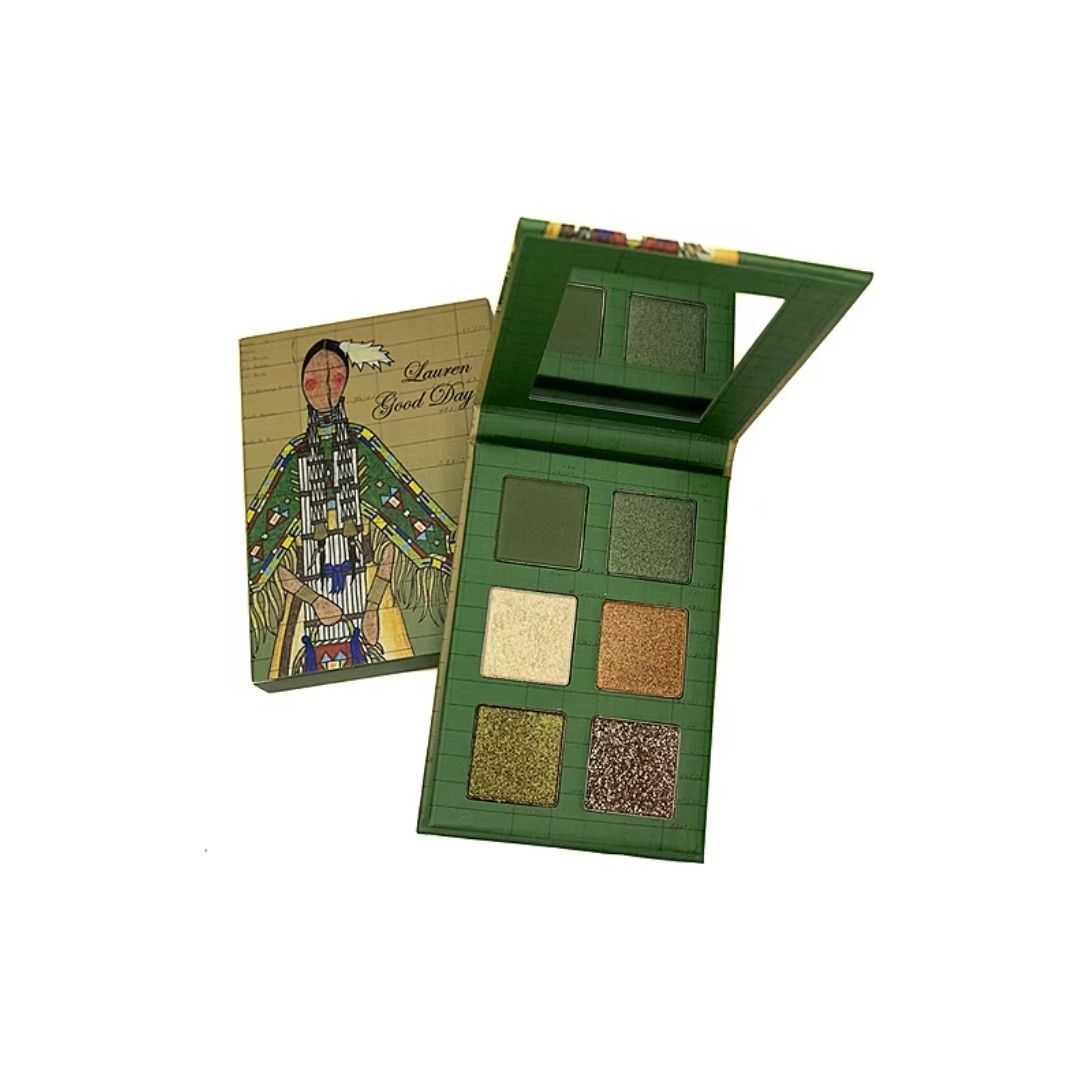
When someone picks up a Prados palette and sees artwork created by an Indigenous artist, or reads a name in our collection that honors our languages or ancestors, it plants a seed of recognition and pride. It tells them, ‘You matter. You belong. You are seen.’ That’s the healing work.
We’ve had customers tell us our products helped them reconnect with their culture, teach their kids about their roots, or feel beautiful in ways they were never allowed to growing up. That’s how beauty becomes medicine — it restores confidence, reconnects us to our lineage, and helps us stand a little taller in a world that often asks us to shrink.
Through Prados, I’m not just selling makeup — I’m helping people reclaim pieces of themselves that were stolen, silenced, or shamed. And that’s where the healing begins.
Lowery: What has the Thirteen Lune and JCPenney partnership meant for your brand, and how do you navigate the complexities of being in a major retail space?
Meadows: That partnership was a major turning point for Prados Beauty. It gave us national visibility — not just as an indie brand, but as an Indigenous-owned company rooted in culture, purpose, and community. Seeing Prados on shelves across the country, in a space where so many of our communities shop, was powerful. It meant that young Indigenous and Latinx kids could walk into a store and see themselves reflected in a real, tangible way. That kind of representation is life-changing.
But let’s be honest — being in major retail also comes with challenges. There are systems that weren’t built with brands like mine in mind, and navigating those spaces means constantly educating, advocating, and pushing for equity. It’s not just about staying visible — it’s about staying true to our values while scaling responsibly. However, I am super blessed and happy that my direct partnership with [JCPenney] has gone so well. They have advocated and empowered not just my business, but also myself as someone who has never navigated this journey. I’m very grateful and thankful for that.
What keeps me grounded is our ‘why.’ I don’t chase validation from the industry — I stay rooted in service to my community. Whether we’re on a national shelf or selling from our warehouse in New Mexico, the mission stays the same: representation, reclamation, and creating something that truly does good in the world.
Lowery: So what are some of the unseen challenges BIPOC beauty founders still face in this industry, especially when trying to scale?
Meadows: One of the biggest challenges is access — to capital, to mentorship, to shelf space, to networks that can actually move the needle. BIPOC founders are often expected to do twice the work with half the resources, and when we finally get a seat at the table, we’re met with systems that weren’t designed with us in mind.
There’s also a lot of performative support — brands or retailers will spotlight us during heritage months or DEI campaigns, but real investment, long-term partnership, and infrastructure support is still lacking. We’re not asking for handouts — we’re asking for the same tools and opportunities that others get by default.
Scaling is especially hard when you’re bootstrapping, navigating generational financial trauma, or carrying the weight of your whole community’s hope on your shoulders. Many of us aren’t just building businesses — we’re breaking cycles.
And on top of that, we’re expected to be perfect. One mistake, one misstep, and the grace that’s extended to legacy brands is often denied to us. That pressure is real. But we keep going because we know we’re building something bigger than ourselves — for our people, for the next generation.
Lowery: How do you balance honoring traditional Indigenous aesthetics with innovating in a fast-paced beauty market?
Meadows: For me, honoring Indigenous aesthetics means leading with respect — every design, every name, every story has meaning and roots in our culture. I’m not just pulling inspiration from my heritage; I’m protecting it, uplifting it, and making sure it’s represented in an authentic way. This means collaborating directly with Indigenous artists, respecting cultural boundaries, and always asking, ‘Is this honoring or exploiting?’
At the same time, I know the beauty market moves fast. Innovation for us isn’t about chasing every trend — it’s about taking what’s timeless in our culture and reimagining it in ways that feel fresh and modern. Our designs are rooted in storytelling, but we pair them with high-performance formulas and packaging that can stand on shelves next to global brands.
I think the balance comes from knowing that we don’t have to choose between tradition and innovation. Our culture is alive — it evolves, just like we do. When we lead with intention, we can create something that feels both deeply ancestral and boldly future-facing.
Lowery: There’s a long legacy of Indigenous hair and beauty practices being policed, erased, or appropriated. How does Prados honor these traditions without watering them down for mainstream appeal?
Meadows: At Prados, we start with reverence, not marketing. Every shade name, pattern, or ingredient we use is first run through a simple test: Does this honor our relatives, and would my grandma be proud? If the answer is yes, we move forward—always in collaboration with the culture-bearers who hold that knowledge. We center community-led creation by hiring Indigenous artists, language keepers, and knowledge-holders at every stage of the process — concept, design, storytelling, and launch. When the people who carry these traditions are directly involved, there’s no dilution; there’s ownership and pride.
Education is also key. We don’t just sell a product — we tell the story behind it. On our packaging, social media, and in-store materials, we share the history and significance of the cultural elements we incorporate. This turns a purchase into a moment of learning and connection, rather than just a trend. And we’re always mindful of consent and reciprocity. If a teaching or symbol is sacred or closed, we leave it untouched. Where sharing is welcomed, we compensate fairly, give credit loudly, and reinvest a portion of our profits into the communities that inspired the work.
At the end of the day, we believe in offering excellence and authenticity — without compromise. Our formulas are high-performing, our packaging is modern and bold, and our stories are real. We don’t water anything down to appeal to the mainstream. Instead, we invite everyone to rise to the beauty and power of Indigenous traditions as they are — whole, sacred, and alive.
Lowery: In your view, how is beauty, especially Indigenous beauty, a form of resistance?
Meadows: Indigenous beauty is resistance because for so long, we were told our features, our languages, our regalia, our skin, and our ceremonies were wrong — even criminal. Our beauty was policed, erased, and repackaged by systems that profited from our silence. So every time we show up in our full selves — braids, dresses, skirts, jewelry, beadwork, brown skin glowing — we’re defying a history that tried to erase us.
Beauty becomes resistance when we reclaim it on our own terms. When we tell our stories, wear our traditions with pride, and create our own platforms to define what’s beautiful — that’s powerful. For me, creating Prados was an act of love, but also rebellion. Rebellion against invisibility. Rebellion against being tokenized. Rebellion against the idea that Indigenous people can’t lead in modern, global industries.
Our existence is resistance. Our beauty is proof we are still here — thriving, evolving, and shining despite it all. And when we celebrate Indigenous beauty, we don’t just honor the past — we protect the future.
Lowery: What roles do community feedback, ancestral wisdom, and trend forecasting play in product creation?
Meadows: At Prados, product creation is a balance of heart, history, and strategy. Community feedback is everything — our customers aren’t just buyers, they’re co-creators. We listen closely to what they want, need, and dream of. Whether it’s asking for certain shades that match their skin tones or wanting more products that celebrate their culture, our community’s voice helps shape every launch. If it doesn’t serve them, we don’t make it.
Ancestral wisdom is our foundation. We carry our teachings, our symbols, our medicines into everything we do — not as decoration, but as intention. We look to the stories of our elders, our traditions, and our ceremonies as guides for how we name products, collaborate with artists, and bring meaning into our packaging and visuals. That spiritual and cultural grounding keeps us rooted in who we are, no matter how far we grow.
And then there’s trend forecasting — which we absolutely use, but we don’t let it lead. We stay aware of what’s happening in the market, because performance and relevance matter, but we always bring it back to purpose. We take what’s trending and filter it through the lens of our values, our identity, and our community’s needs. That’s how we stay innovative and authentic.
In short, it’s not about following the crowd — it’s about honoring our roots while designing for our future. When we align those three — community, ancestors, and industry insight — we create products that aren’t just beautiful, they’re meaningful.
Lowery: Your story is deeply rooted in healing, from cancer to reclaiming cultural identity. How has that shaped your definition of beauty?
Healing has completely transformed how I define beauty. After surviving cancer, I no longer see beauty as something purely external — it became about survival, softness, strength, and how we care for ourselves and others. Losing my hair, watching my body change, and facing mortality forced me to ask: What does beauty really mean if everything on the outside disappears? And the answer was — it’s what’s within. It’s how you show up for yourself when no one’s watching. It’s choosing to love yourself when your body feels like a battlefield.
Culturally, I’ve always been deeply connected. My roots have always guided me. But over time, I’ve learned to be more vocal and proud of my identity — without fear, and without shrinking myself for anyone else’s comfort. I stopped caring about what others might think or say and started honoring my full self, loudly and unapologetically. That shift didn’t just change how I saw myself — it changed how I moved through the world.
Now, beauty to me is freedom. The freedom to show up as you are. The freedom to heal and still be worthy. The freedom to define beauty on your own terms — rooted in truth, in culture, and in love.
Lowery: You’re also giving back through the Prados Life Foundation. How do you see business and activism working together?
Meadows: For me, business and activism aren’t separate — they’re intertwined. Prados was never just about selling makeup; it’s always been about doing good in the world. The Prados Life Foundation is our way of turning profit into purpose — supporting Indigenous communities, youth programs, mental health initiatives, and everyday people who just need a little extra help.
I believe that if you have a platform, you have a responsibility. As a business owner, I don’t just want to succeed — I want to create pathways for others to thrive. That means putting our values into action: redistributing resources, investing in community, and showing up in real, tangible ways. Activism isn’t just posting on social media — it’s how we hire, how we give back, how we design products, and how we show up when our communities are hurting.
At the end of the day, I see business as a tool. And in the right hands — hands that are guided by culture, heart, and justice — it can be a tool for liberation, not just profit.
Lowery: What advice would you give to young Indigenous creators entering the beauty space today?
Meadows: First and foremost — you belong here. Not just as a trend or a moment, but as a leader, a visionary, and a creator in your own right. Don’t wait for someone to give you permission to take up space — take it. Your culture, your voice, your art — it’s powerful, and the world needs it.
Stay rooted in who you are. This industry will try to shape you, dilute you, or tell you that you need to change to succeed — but your authenticity is your superpower. Lean into your traditions, your stories, and your community. Let them guide your path and keep you grounded.
Also, don’t be afraid to ask for help or build your own table. The beauty industry can feel lonely at times, especially when you’re one of the few. Find mentors, uplift other BIPOC creatives, and remember: community over competition, always.
Lastly — take care of yourself. Rest is part of the work. Your well-being matters just as much as your vision. You’re not just building a brand — you’re building a legacy. And I’m rooting for you every step of the way.
Lowery: Hair has deep cultural and spiritual meaning across Indigenous communities; and for many, it’s also tied to grief and remembrance. How do beauty practices like hair braiding or adornment relate to healing from collective trauma?
Meadows: In many Indigenous cultures, our hair is sacred — it holds memory, strength, and spirit. Braiding, combing, adorning — these aren’t just beauty rituals, they’re acts of care, connection, and ceremony. Our elders taught us that the way we touch and care for our hair is how we speak to our spirit. It’s a language of love — between generations, between ancestors, between ourselves.
Braiding a loved one’s hair, brushing your own, or wearing red as remembrance — these are forms of resistance and healing. They remind us that while our people are hurting, we are also still here, honoring them, remembering them, and carrying their stories forward with every strand, every ribbon, every braid.
At Prados, we hold that reverence close. We know that beauty is never just surface level — it’s deeply spiritual.
