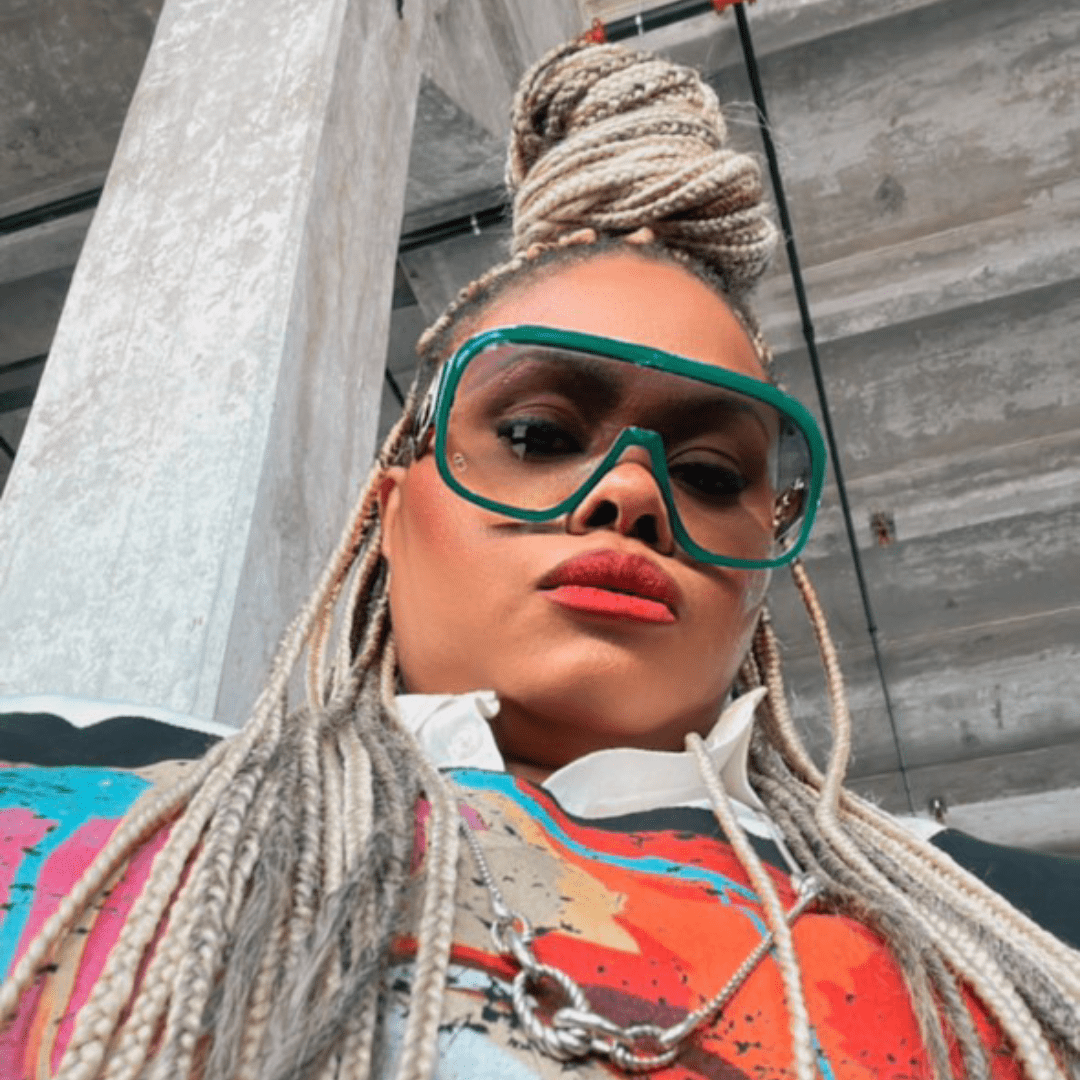
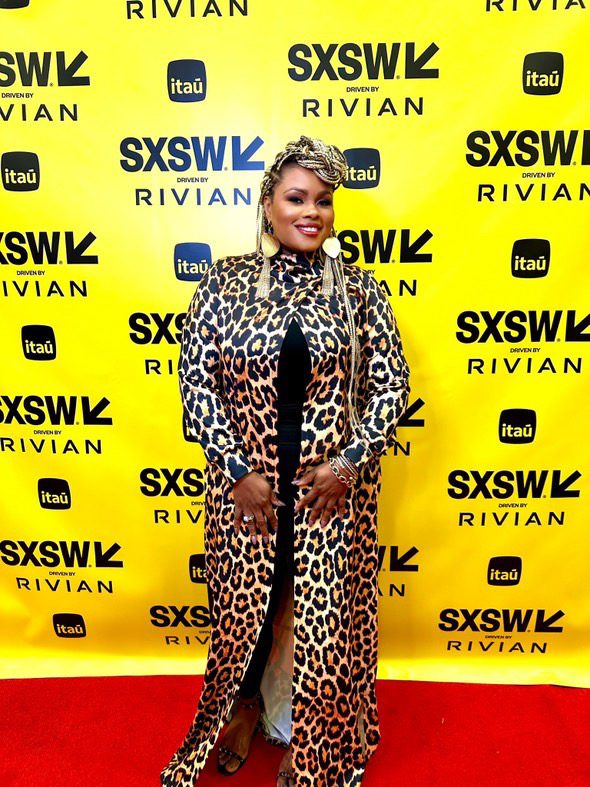
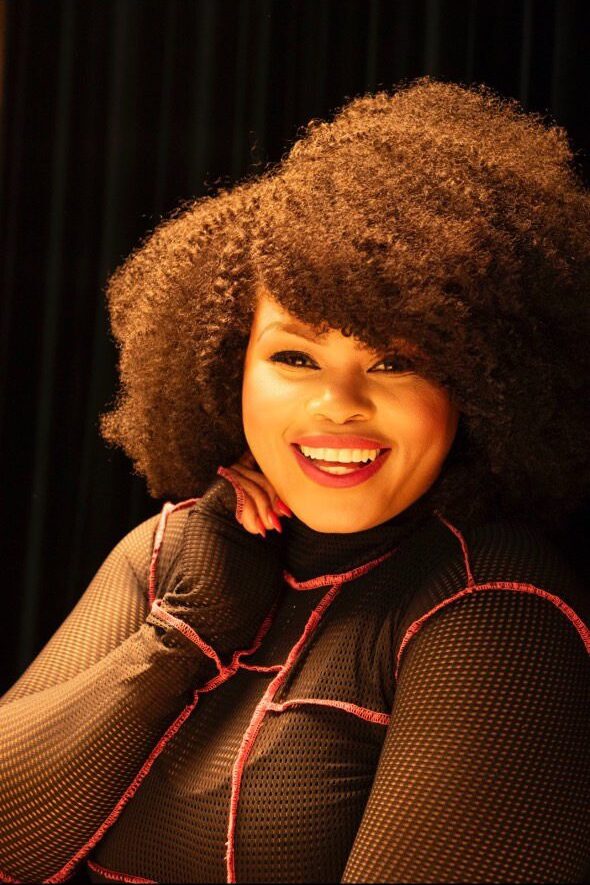
Keya Neal doesn’t just teach — she transforms. IYKYK! From her early days behind the chair to her evolution as a nationally recognized educator and founder of Texture vs Race, Neal has redefined what it means to lead in the beauty industry.
In this conversation, Neal opens up about the journey that brought her to education, reflects on winning one of the industry’s biggest awards, and tells us how she’s using her platform with discernment in today’s polarized political landscape.
Jeffrey C. Lunnen: Did you always know you were going to do hair?
Keya Neal: “I didn’t. I was in college as a journalist. I went for journalism and public relations and I think I just got bored with it really quickly and so I started contemplating not going back over a break. And one of my friends said, ‘You should go to cosmetology school.’ And I literally was like, ‘For what?’ And she was like, ‘To do hair.’ I was like, ‘For who?’ And she’s like, ‘People.’ I’m like, ‘For money?’ And she was like, ‘Yeah, you do good hair. Like, you do your hair and, you know, you play in mine and you wear makeup.’
How did you get your start?
Keya Neal: “So I ended up asking the guy that was doing my hair. I mentioned it and he said ‘well if you go, go to Dudley’s in North Carolina.’ It was pretty much kind of like theBlack version of Vidal Sassoon. And they had people come from all over the world to come to their schools.
And I went there. I wasn’t good, Jeffrey. I sucked. I literally sucked. I don’t know if I could stress that enough. Like when I called my mom and said, ‘Ma, I suck.’ She was like, ‘Oh, why do you think that?’ I’m like, ’cause they told me, they said, ‘I suck.’ They said, ‘You suck.’ Like,’ why are you here? Who told you to come to the Cosmetology School?’ And I just outworked it — I outworked it because I was smart. I was a journalism major. So that meant reading, absorbing information, words, literature. I was my jam. So I understood everything in that book from page one to the end. And so they couldn’t send me home. I was too smart to send home!”
Working behind the chair and educating others to be better behind the chair are two very different things, what inspired you to get into teaching?
Keya Neal: “[At Dudley] their next door, in another building, was their advanced education — where pros would come in for the week to learn. And as an honor student, I was able to come over on the weekends and be a part of that process. So we were assisting, we were helping the students, we were learning, we were able to do makeup. Being in that environment yielded my thought for education. Like that’s where I think the seed was planted first to be an educator, to be a platform artist, because that’s what that was about. And Dudley was so crisp! Everybody wore suits, everybody had to wear navy, everybody wore pantyhose — just talking about the early 90s, you know, you had to be a certain way. And so that really instilled in me like, I wanna do that.”
So what was it about the instructors? What was it that sort of awakened something in you?
Keya Neal: “Well, one, it was the heart of the company. The company felt like at a core value, no one leaves until they got it. Everyone had to be that way, but all of the instructors were, they were just highly educated. They were insanely skilled, but they knew how to trigger all your senses at once. So a lot of the presentations had to do with a lot of slick commentary,deep education, wild presentation, smells, like they would take, you know, they’d ask and [gestures like she’s spraying the air with hairspray] tell you to smell the air. And it was all the things like they made you feel like you were, you were at a show when you watched them. And it was nothing like it. Like I had never seen anybody like it.
So I got mentored, I worked my first salon before I moved back to Charleston, I worked with one of the [Dudley] educators. She had a salon and went to Salem and I worked under her to perfect the craft. When I did come back to Charleston, I stayed connected to Dudley. So that meant when they did classes, I used my salon as a host. If they needed assistance,I assisted for at least 10 years.
And then shortly after, a company was developed called Influence Hair Care. And they were like almost a carbon copy of Dudley and they gave me my first shot. But here’s the thing about it. I was great from day one with them. Okay. And the reason why I was great at day one is because I had been on the runway for so long with Dudley. By the time I got on their stage, I knew exactly what to do and exactly how to show up and exactly how to engage. And I was great at doing hair by then.”
Tell me what makes a great educator.
Keya Neal: “I was great from day one. Great from day one, meaning I had the stage presence. I knew how to do hair and not be in the way visually. That’s a huge thing for me. Some people know how to do hair. They know how to demonstrate hair, but they don’t know how to educate on hair. There’s a difference between facilitation and education, right? There’s a difference between facilitation and demonstration. And so you very seldom hit with someone that has all three. So I was a dynamic speaker, I was a dynamic demonstrator, and I was a dynamic facilitator, meaning I could get you to see what I was saying even if you wasn’t seeing it and that’s a difference. I can teach a class with the camera off and still get you to see what I’m saying.
I got a lot of education. I stayed behind the ground. I asked the questions. I viewed, I followed the people that I wanted to aspire to be behind. So I have a right to say that, oh, yeah, I became great at what I did because I put the work in to do it. Nothing was inherent. Nothing was inherent. I didn’t just learn it. I earned it. That is a fact.
And so, when the NAHA [win] came along, one, I was a Black woman winning it for the first time. Two, I was a woman who has stood on her authenticity so much in that moment.”
Talk to me about that NAHA win, what did it mean for you?
Keya Neal: “It came at a time where I really needed it emotionally, socially, all the things, but it means so much because it means that my peers see me and that they acknowledge what I bring to the industry. I needed them to know that I was much more than just an aggregate of whatever the conversation was at that point, I brought so much to the industry. And so it was kind of a relief, so to speak, because I’d been holding my breath thinking, ‘Do I ever want to do this again?’ Like, ‘do I even want to be here?’ And it was a huge nod and a pat on the back and that speaks volumes for me and it did give me wind that I didn’t know I needed at that time. With all that was going on, bandwidth was, was running really, really thin, you know? Like you, you just get to a point where you’re like, I’m speaking to people who don’t have ears to hear. And so you, I started to shut down a little bit. And I started saying, you know, I think, I think I want to come out of this. Like, I don’t think I want to do this anymore. And so the win, it was almost like a resuscitation. And so I think they blew breath in my chest.
I don’t know about you, but I will hold my breath sometimes. And you have to remember like, girl, breathe. And so I don’t think I knew that I wasn’t breathing. So when they, when I, they announced it, that, you know, that I won, I think my first impulse was to take a huge deep breath.”
What has it meant to be award-winning? Has it opened doors? Closed them?
Keya Neal: “So [the win] gave me an opportunity to reassess. Okay. To reimagine, because I was already kind of questioning things, but I was really in a tap out. Like I was in just tap out mode. I just wanted to reevaluate, reimagine, rediscover, realign, recalibrate how I’m going to show up and what capacity am I going to show up and for whom I will show up. And I’ve just had time to do that. And so I’m actually really excited.”
You have been working tirelessly to change the salon professional industry for years, insisting that it be more inclusive of Black people and of all hair textures — even literally creating spaces via Texture vs Race for hairstylists to experience the full spectrum. What does Texture vs Race mean to you?
Keya Neal: “Honestly, TVR is that space where like-minded people come together. But you don’t know you’re in ‘like mind’ until you’re in ‘like space.’ And sometimes it’s hard to get people into like space because they are too busy wanting to like it. And they want to have this preconceived expected promise that they’re going to like it. And you got to want to feel better, do better, show up better, evolve better than you want to like the process. I don’t like medicine, but I like that I’m gonna feel better on the other side. So sometimes you gotta take a little medicine, but if I’m afraid of medicine, that means I’m okay with being sick and all the symptoms.
[TVR] is nothing like what people think it is. And I’m not even sure if that’s because the name has always kind of done itself in? Somebody told me that recently. They were like, ‘You might think about changing the name.’ And I was like, ‘I don’t know.’ I said, ‘the name jarred people and I think it was meant to start conversation.’ And I think it has. Why do you think that is? Let’s talk about that for a second. What Texture vs Race, like at its core, it is doing what it’s telling people. At its core, it underscores the fact that hair is a fabric, not a race. People can’t get past race because race, white and other key words like privilege, those words trigger people. So when they see it, they automatically think racism, racist, supremacy, and all these things that they don’t want to necessarily be associated with. Because those have a trigger, a trigger response. Because those have a trigger, a trigger response, guilt, you know, all of those things — fear. And so because there’s this trickling effect, they tend to go, ‘Oh God, I’ll be talking about race.’ They don’t even see that I’m saying. I’m saying it ain’t about race. That’s what I’m really saying. Texture has nothing to do with race. It’s a versus, not together. It’s versus, did you not read? It said versus this, versus that — not this because of that. But when you are so, when you are so sensitive, anything will prick you. Anything.”
What do you think about the current political environment, particularly the rolling back of diversity, equity and inclusion efforts, attacks on Black history and the LGBTQ community, cracking down on women’s rights and more?
Keya Neal: “I love it that people are more open about how they really feel, because that saves me the trouble of trying to figure it out. I don’t like to discover things, per se. Ask my husband, my kids. I’m like, you better off telling me something. It’s wasted energy to an extent, right? So I feel like people who are taking their masks off, I actually have the most, I am most peaceful ’cause now I can say, oh, okay, great, you, that’s you. Okay, well, you go over there.
Now, you are a them because there’s us and then there’s them, right? This is where the new segregation comes in. I told you this, the last podcast or before, I said there was a new segregation coming upon us and I didn’t think people were willing to hear it, but I knew over a year ago, maybe the beginning of ‘24. I started saying there’s a new segregation upon us and there’s going to be a ‘us’ and a ‘them’ and that it’s going to be that the ‘do’s’ and the ‘don’t,’ those that do want a world where everyone can live and thrive in peace and show up the way they want to exist the way they want to have their basic human rights, all of that. Then it’s going to be the them that don’t, because what is that, what is the opposite of diversity? What’s the opposite of equity, what’s the opposite of inclusion? If you’re okay with answering what that is and you’re okay with that, then I need you to be over there and I can, I am — there doesn’t have to be a protest. I’m not going to blow your whistles. I’m not writing no letters. I’m not, I’m not [doing] any of that. I’m just going to stay away from you.”
Do you think the salon professional industry should be hosting events in states with policies that are hostile to many beauty pros — Florida, Texas?
Keya Neal: “I will tell you this. I would tell this particular show and organization to really rethink where they wanna be. And they have to take a stand in that. Will we come? Yes. Will we be kind of fearful? Have our head on swivel? Absolutely. Would I spend my money independently of doing something so magnanimous for one time, one year? Would I spend my money outside of that? Absolutely not. I do not go. I do not go asking, but I do not go to Florida for anything.
And it’s going to be necessary at some point because eventually people are going to start making… having expectations of you to change that, right? Can’t you find someplace else to go? That isn’t so violent and unsafe for your attendees? I would move my space, I would move my place. I mean, I know you might have a contract or something, but say that too. We have a contract for the next two years and then we will be looking at something else.
We’re living in a very ambiguous space. Like no one knows exactly what to expect. And I think the only thing we’re clear on is that we’re unclear.”
So what the hell can we do? Where do you see things going from here? I ask because so many see you as a leader.
Keya Neal: “People are always in my DMs like, ‘What do you think of this? Did you see this?’ And I’m like, ‘No, girl. I ain’t got nothing to say.’ I don’t take on everything. Nor should you have to. You can’t take on everything, but if it won’t leave me, it keeps coming to me. And God shows me and says, ‘This is where you got to lean in,’ that’s where I put my time. And I just think people ought to have more of that discernment about where they spend their time, money, energy, and where they take their bodies.
It’s gonna be super important that as we revisit our own economics, our own safety, you know, all of those things, right? Does this show serve me? Is it going to feed my lifestyle? Am I gonna have… does me spending money with this organization, this movement, this class, this education, whatever, does that serve more than one purpose? Like am I helping to move the needle forward? So you can spend, ’cause what we’re seeing now too is a lot of brands are doing their own things. Does that help you? Like if that’s the brand that you have in your salon and they’re pouring into you and they’re elevating and mentoring and incubating your business, great. But if you’re going there for a good time and you spend all your money just to be surrounded by a pool and you didn’t take your glasses and you on a perpetual smoke break. I don’t know, just be more specific about how you spend your time, money, energy, and where you put your body.”