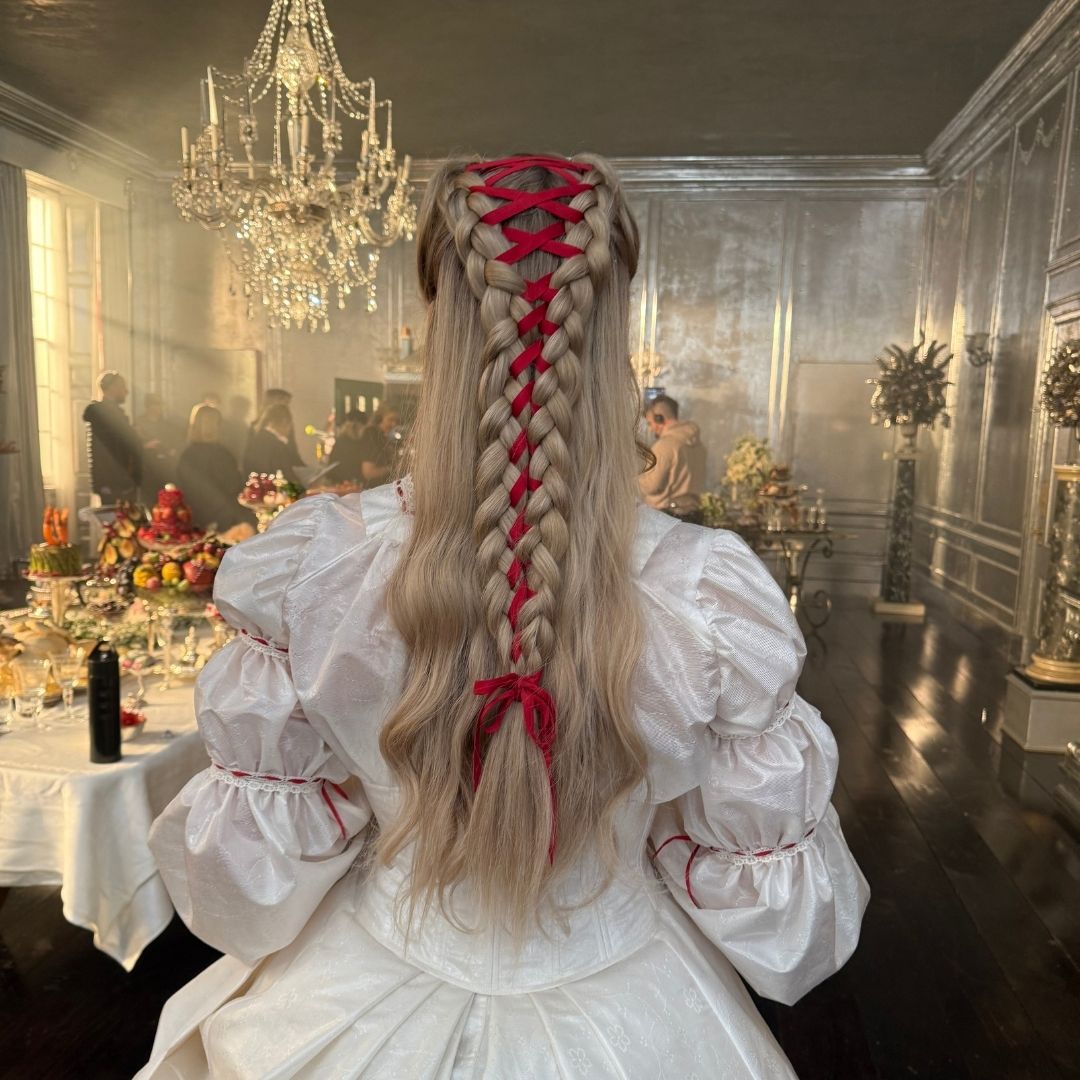
Writer-director Emerald Fennell’s new film, “Wuthering Heights,” is an adaptation anchored in her memory of reading Emily Brontë’s classic that, as she says, “isn’t quite real.” Fennell’s version, as she imaged the story, things she wanted to happen, allowed for bold creative choices, like tapping Charli XCX for the soundtrack and historical anachronisms in set, costume, hair and makeup design. Given the box-office returns, her approach is resonating — and already influencing pop culture.
Siân Miller, the hair, makeup and prosthetics designer for the film, the mastermind behind some of the film’s most lusted-after, and copied, looks, including those corset braids, describes the shoot as “exciting, challenging, super creative and beautiful.” The Tease spoke with Miller, after seeing the film, and we got to ask our most burning questions about what it was like to have a hand in building the world that is “Wuthering Heights,” particularly through hair.
Read on for our conversation.
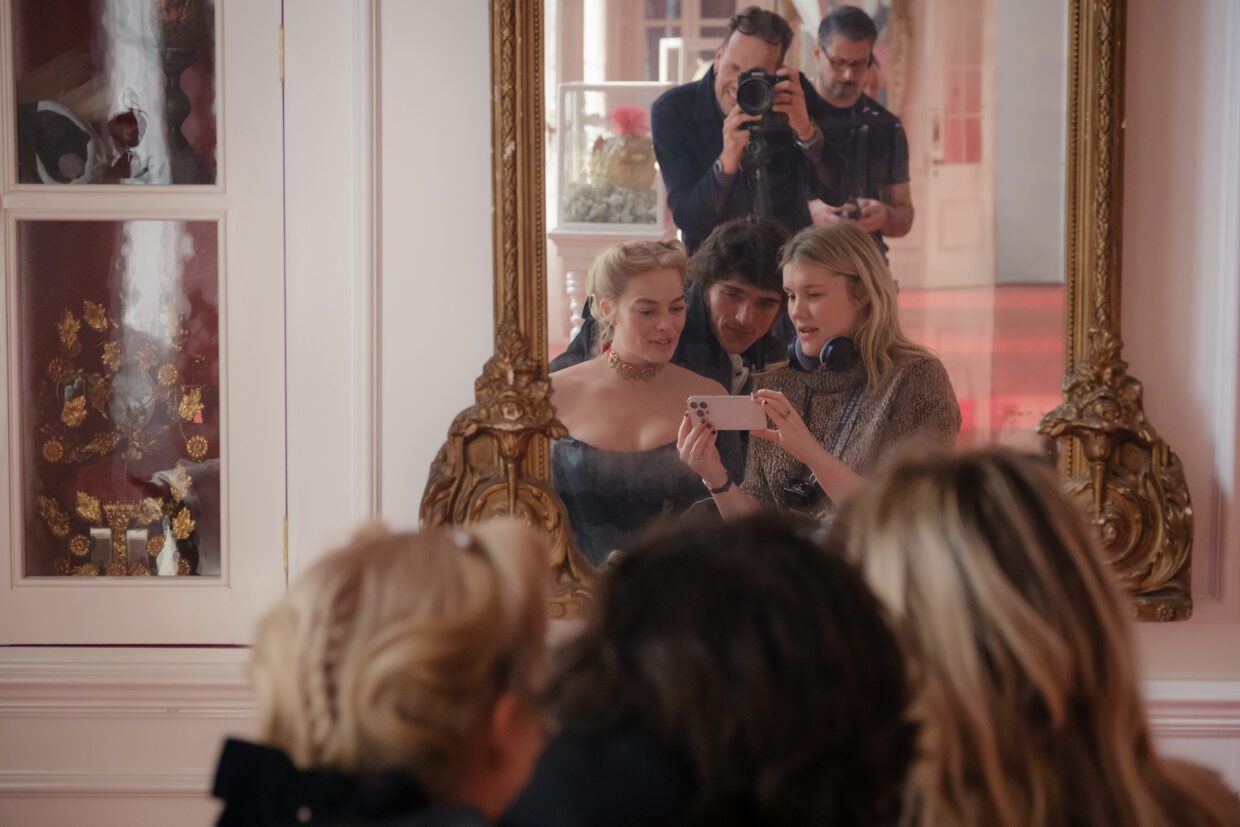
The Tease: Let’s start at the beginning. Emerald Fennel has described the movie as a ‘fever dream.’ Her Wuthering Heights is an adaptation. What license did this give you for hair and makeup design?
Siân Miller: A lot of license. Yeah. The first thing [Emerald Fennell] said to me is, genuinely, is ‘imagine this is seen through the eyes a 14 year old. It’s a fever dream. It’s a kind of a fairy tale of sorts.’ That was my starting point and it became very obvious when I then got Emerald’s mood board.
Obviously I’d read the script full of detail, but her mood boards are incredibly evocative. They’re always incredibly detailed images drawn from everything and anything. And then meeting Suzie Davies, the production designer, Jacqueline Durran costume designer, and a big round table meeting with them, which Emerald’s, the walls in her office were literally wallpapered with even more reference, a ton of costume, and from everywhere. It’s photography, it’s fine arts, it’s film, it’s fashion, it’s the wilderness, it’s architecture, it’s food. It’s just everything. There’s so much in there that’s creating that kind of world.
And then really just about learning the language to that and knowing that actually, as much as this was evocative of kind of that mid century melodrama. It’s not 1950s inspired. I’ve seen it three times now, it definitely has that kind of melodrama mood. And I could kind of cherry pick from a variety of sources that fitted in to kind of that whole ethos.
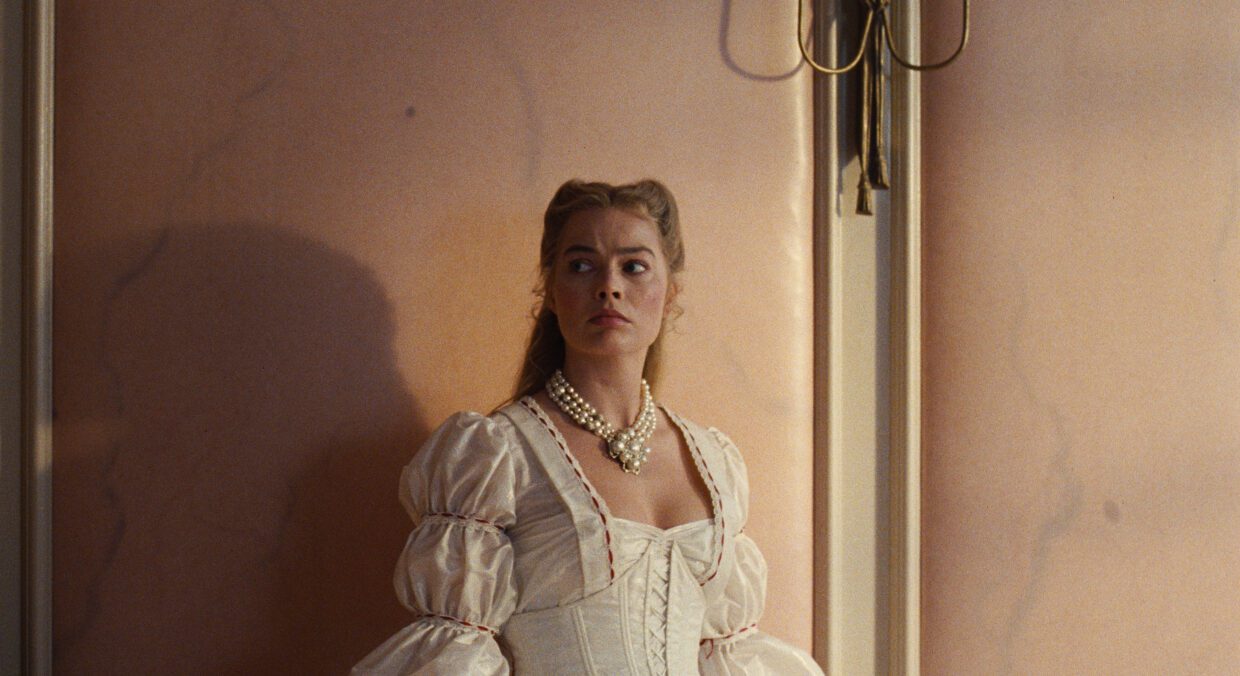
Margot Robbie in particular is so known for her on-screen looks. Did you feel any pressure knowing her choices often become a part of pop culture?
Siân Miller: No, I didn’t feel pressure about coming up with the looks. And in truth, Emerald was very certain that she wouldn’t actually show anything to Margot until she arrived in the UK.
What I did feel, which is what I feel on most films, though, is that the clock is ticking. And there’s always this finite amount of time. This isn’t criticism of this film, because actually I probably was afforded the right amount of time or just about enough time. But, you know, creatives never have enough time. So, there are things that I could do. I got the wigs underway. I knew the wigmakers I wanted to use. I’d sourced, because I didn’t have access to Margot and she was having her baby, I sourced a wig shape in LA from another maker, had that sent over to the wigmaker of choice, Carol Robinson in the UK, down in Bristol. I took a trip down there came back with bundles of hair. Emerald and I chose the hair color. That all happened.
I think when you work, and you’re an actor, and you work with somebody like Emerald and, certainly, someone like Margot with the LuckyChap relationship they have, there’s a trust. So in truth, Margot was really cool about this and we just got on with it.
I had to, Jacob [Elordi] and Alison [Oliver], Samuel James Wigs, that I had on board to make, and to make Martin Clunes’s wigs. Got them in quite early. Jo Flowers made young Cathy’s wigs for me. I was able to get access to them in enough time, particularly with Sam, because he’s incredibly busy. We got ahead of that, had access to Jacob and Alison quite early on, again, sourcing the hair, working out what we wanted to do with them. In any of the prosthetic stuff, like with the freckle mask, having scans where we could. Although we ended up, actually, I got Waldo Mason FX, I got him to do that at the read-through. He was running around, as was Chris Lyons from Fangs FX, casting teeth. Waldo with his little handheld scanner. Of course it’s a bit kind of like the Benny Hill music at times. I find that on every film now, though. It just doesn’t matter how long you’ve got.
You mentioned briefly talking with Emerald about the choices for Cathy, and again, we’ve established it’s an adaptation. But was there ever a time in which Cathy would be brunette?
Siân Miller: No, No, there wasn’t. I talked to Emerald, I said, ‘what do you reckon? What do you think?’ She said, ‘I think she should be blonde,’ but she said, ‘but what I want to do is, I want the younger Cathy to be even more of that kind of Swedish, kind of like quite white blonde, which matures to darker when she gets older.’
And I think really what this was about is about what suits, you know? I mean, it’s Margot Robbie. Good god. I mean she can wear anything. But I think it’s kind of what suits, and actually, if it ain’t broke don’t fix it. And it was a great idea. It fitted into that whole kind of idea about this sort of other sort of fairy tale sort of version, this world. And it works. And sometimes you don’t have to do something else for the sake of doing something else, you know?
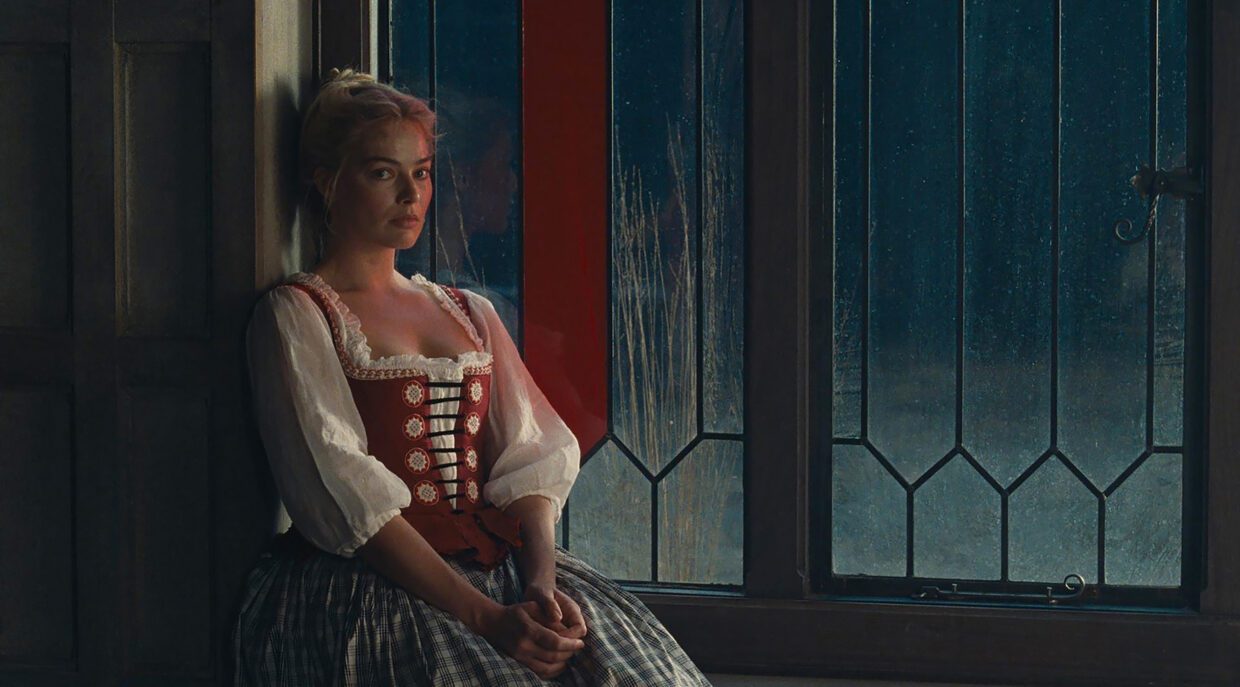
There’s such contrast between young Cathy and Heathcliff at Wuthering Heights versus the two of them at Thrushcross Grange. Nelly too. There’s a sort of feral quality which extends to their hair. I imagine this was intentional. Could you talk to us about how you view hair design contributing to the narrative?
Siân Miller: With the young Kathy pre-curled hair, you know, that we did then because, of course, that kind of hair, it’s very, very hard to source virgin, unprocessed hair of that length in that color, as we all know. Whereas with Jacob and Alison, that’s pure untouched as it is. Leave it alone. So we did a lot of breaking down with that, and actually wove through, in the end, low lights, but with kind of dirt products. Liquid kind of products that we could, I mean, you wouldn’t believe the amount of root it had it. But the moment you get wigs that color on camera, the bright just takes over.

For the older Cathy, with Margo, we used her own front for the majority of the Wuthering Heights work, which her colorist, Sally Northwood in London, at George Northwood, did a great job at matching her hair to a tiny sample of hair. It was the same on ‘Saltburn,’ actually, with Rosamund Pike, the same thing. And you’re doing it kind of round the wrong way. Here’s a tiny bit of hair. Can you match Margot’s to that, which she did brilliantly. Sally did a great job. It took most of the day, but we got there in the end. And then I had a back piece and there were lots of wefts. Again, they were pre-curled. And really, it was about Margot leaving her own hair kind of very much slept on. And actually, sometimes more product does more harm than good. We kind of left it kind of quite raw and very untouched. Sometimes the more you’re in trouble. It wasn’t laden with lots of products.
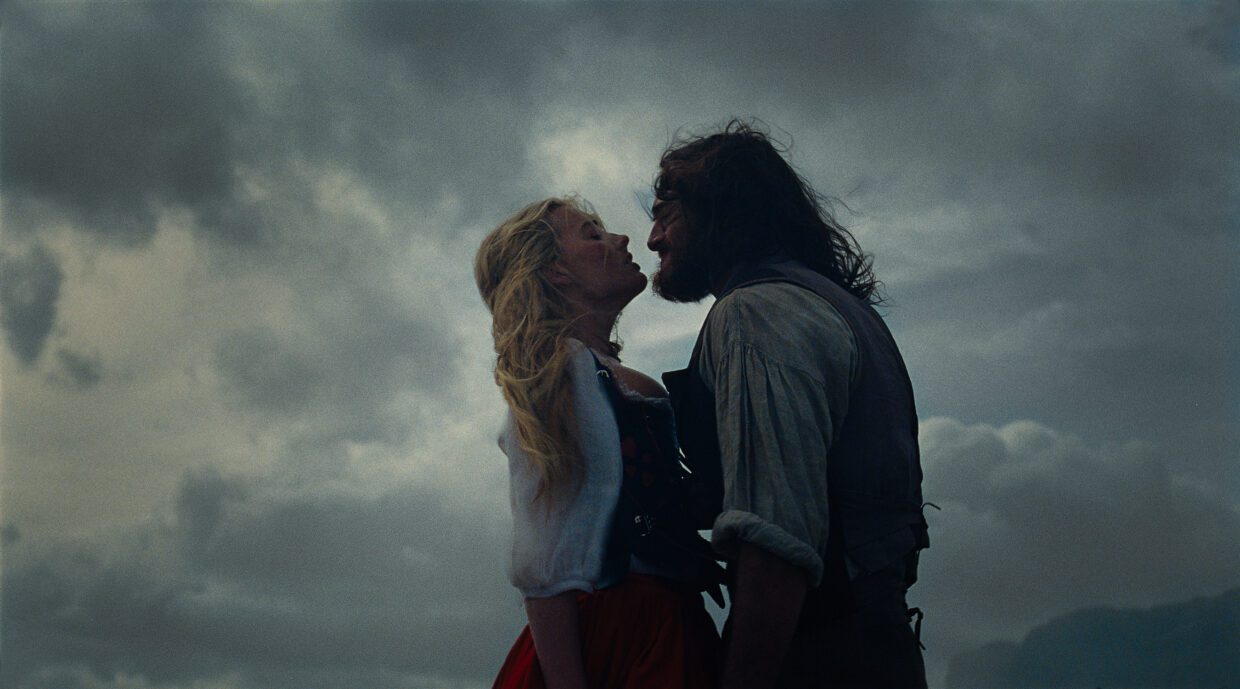
And then, and then the same with Heathcliff, the younger version. I, poor Owen. I took chunks out of his hair. And we cropped it and then I also put in some little prosthetic, little tiny pieces that are to sit over the top to look like little scabs. It’s just a few in there. But I did sort of do a very unorthodox clipper cut where I then sort of went in at angles with just no guard and just took out, you know, so it’s very textured and as much as we could get away with that. And then to wig Jacob for the older Heathcliff, knowing that we’d be going then to the cut for the Mr. Darcy-esque, quintessential look.
So much of the film is about tethers, connection, control, dominance, submission — being done and undone. There’s quite a through line of BDSM… and ligatures via corsetry, ribbons and braids. Could you tell us about those choices?
Siân Miller: So from my point of view, as I said, I did work very closely with Jacqueline. So I knew about the corsetry. I knew there’d be the wonderful leather corset. And that had to be, I think, as well, to enable him, Heathcliff to lift up Cathy. And the idea that, when you don’t necessarily, although she has Nelly, they don’t have a lot of servants to lace them up from the back. You could do that yourself. I think it was something that I didn’t consciously think about that kind of BDSM narrative as I did it, but I knew because it was very scripted. That it was a very integral part of the story.
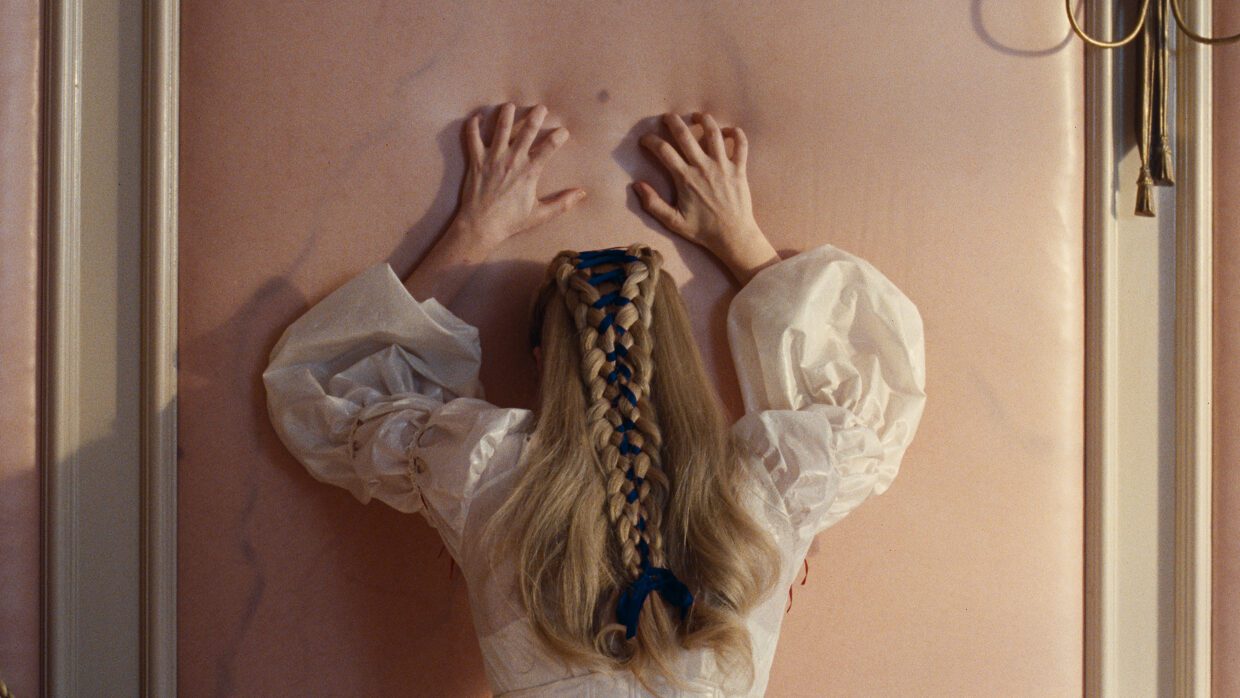
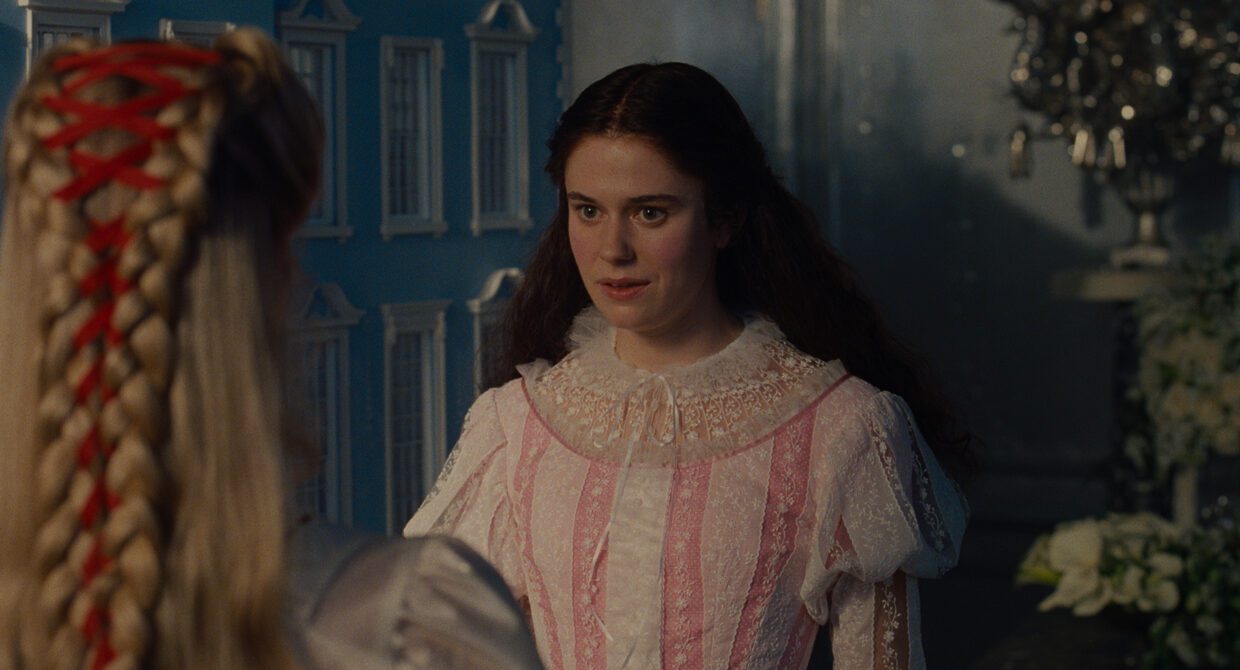
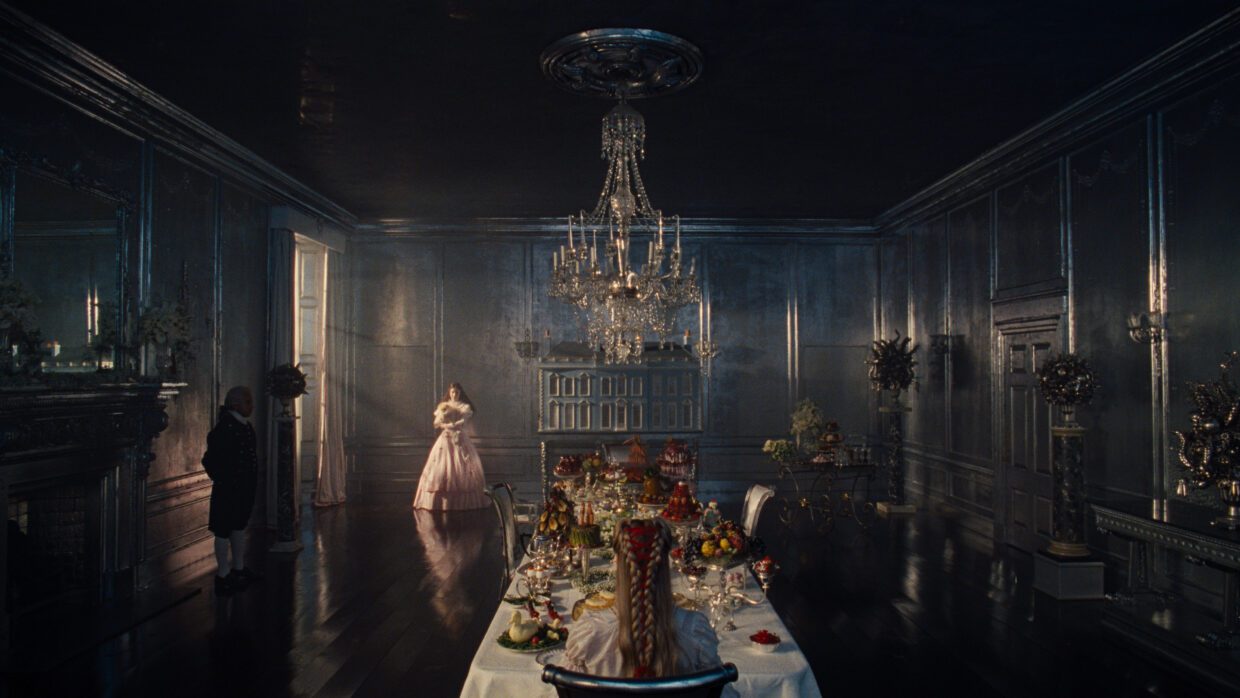
Cathy goes to the Grange. She’s married Edgar. [Isabella’s] given up her ribbon room for this dressing room. All the dresses in there, which are wonderful, but they’ve all been created and ordered by Isabella. And she’s already preordained that the doll in the doll’s house already looks like how she has actually then made Cathy look that very day with matching hair, in the dress. None of it’s by accident.
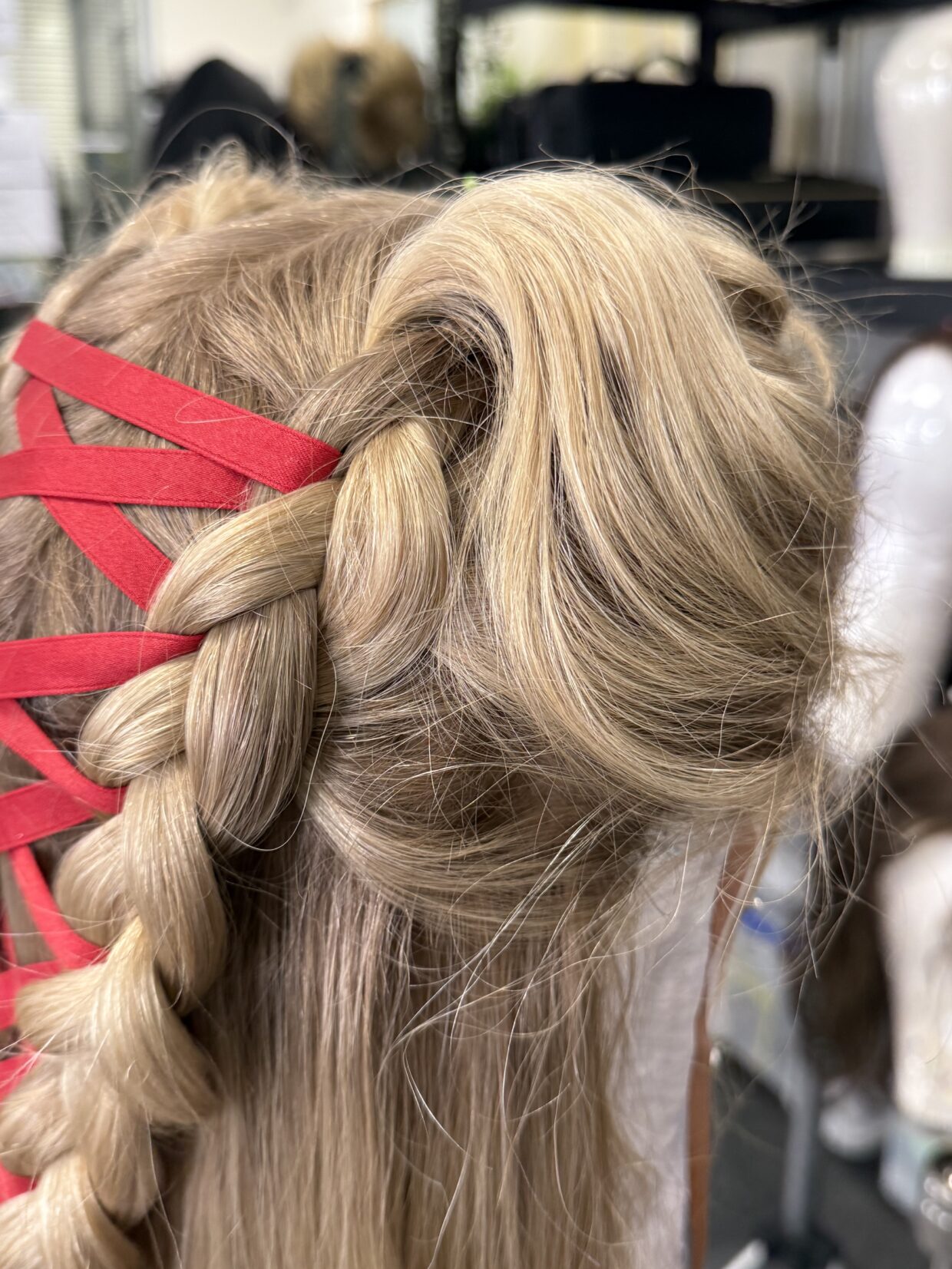
And there’s that sense of control. ‘Your hair is so singular. I took your hair from the hairbrush.’ And now I’m going to do all these wonderful things to it because we’re isolated here. There’s nothing to do. But I’ve got everything we need. So we can just play dress up the whole time but that’s very much sort of the subversion there of Isabella. As much as she’s meek and she’s mild and she’s childlike, and you know, she reads Shakespeare. But she’s quite controlling there at the same time and, of course, we see when things aren’t going her way and she sort of harms her hand with a needle. So there’s all sorts of power play going on here all this emotional swinging backwards and forwards and they’re sort of almost like spinning plates against each other.
In terms of Cathy as sort of Isabella’s play thing and the dress-up of it all, you alluded to the wefts, the falls, ultimately the wigs. In terms of the scope, do you have a sense of how many looks you wound up doing for Cathy?
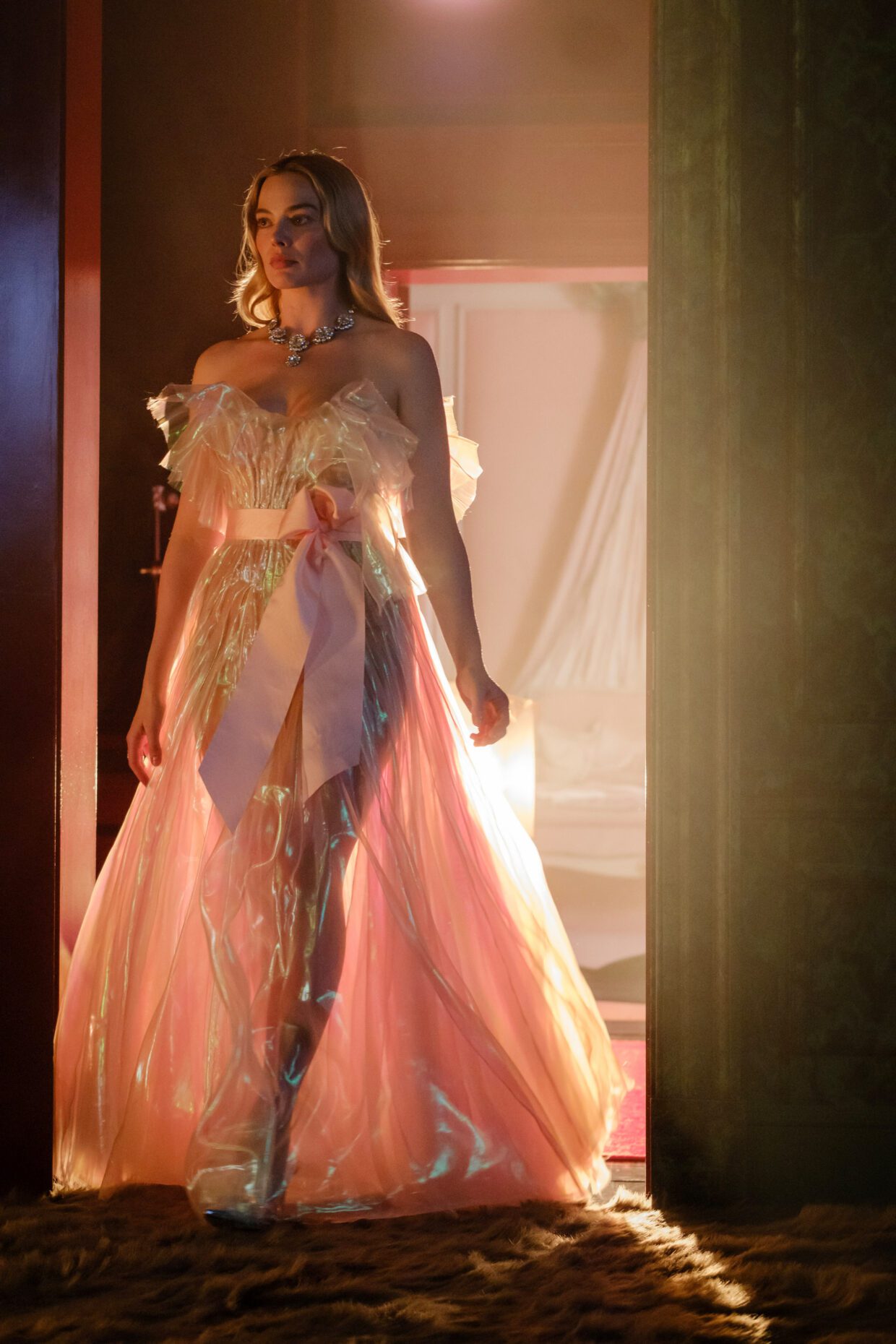
Siân Miller: I think the last count, I think it was around 35 variations on Cathy. A lot of that is at the Grange. And how we manage that because, you know, time constraints with a filming day was to have two hero wigs. So whereas we’d use a back piece and her own hair in the majority of Wuthering Heights. When she gets back in the carriage, that’s actually a wig. But I had these two hero wigs. One that we took the root out of. It was better for the softer styles that we see at the beginning of the Grange. The other one we left the root in because that really helped us more with the rolls and the structure. But we would leap frog nonetheless with a ton of hair pieces from switches, wefts, which I just said to the team at the beginning, which I think was misunderstood at first, but it needs to be like Lego. Interchangeable, one minute, it’s a plane, then it’s a car. You know, do things we could just switch in and out really quickly.
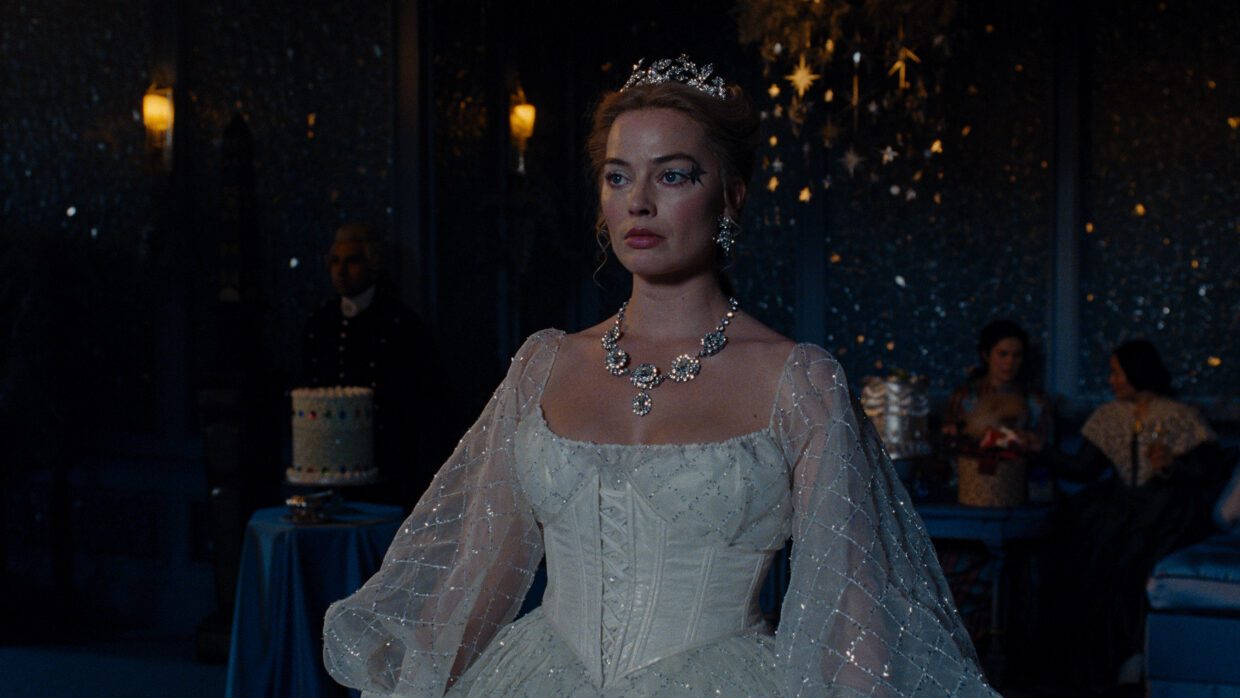
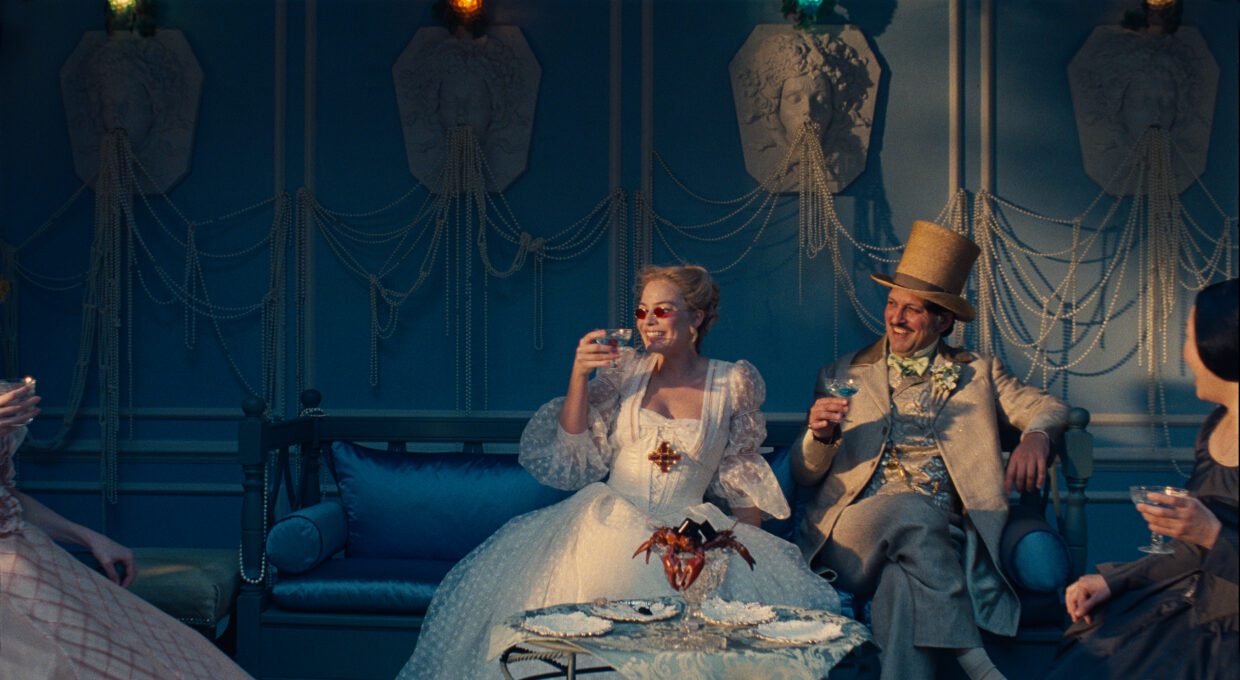
And certainly with the montage, because the montage is very heavily scripted. And for all departments, we were never quite sure, as much as it was scheduled, when we’d actually be afforded the time to get to it. And I think when it did was the end of the day, we had about an hour and a half to do it. It was, it was like a game show, like a cooking kind of bake-off with every department. It was really good fun. We all laid our wigs out on tables and everybody was just racing against the clock to just turn it around as the camera turned around for all the different kind of facets that are in that whole montage. It was great fun, but we just had to be really prepared. Just a tried and tested kind of sort of basis of shape to work on that we could then build on and then of course you know the accoutrements like glasses and hats and all those things.
Could we talk about the evolution of Cathy’s hair at Thrushcross Grange? It seems to go up, up, up and then more complicated with the rolls or ‘horns.‘
Siân Miller: Well, Emerald said it first. I had a picture on amongst all my mood boards of Vivian Lee in Gone with the Wind from 1939. And the image, the way, it was a sort of grainy photocopy, as often it is. And so it was much more of a sort of a silhouette, if you like.
Vivian Lee for me and that became the kind of that motif because I had the sense that it would suit Margot. And of course it wasn’t until we got Margot in the chair and we could try these things, but I thought this will suit her. This silhouette will become a bit of a motif in the front with variations on the theme. And as she becomes more arched, her costumes become a bit more streamlined and things just become more defined. We call them horns and then just trying, me and the team, trying all this stuff out. It was like, oh, hang on, this could be the later motif. And that’s really how we got there.
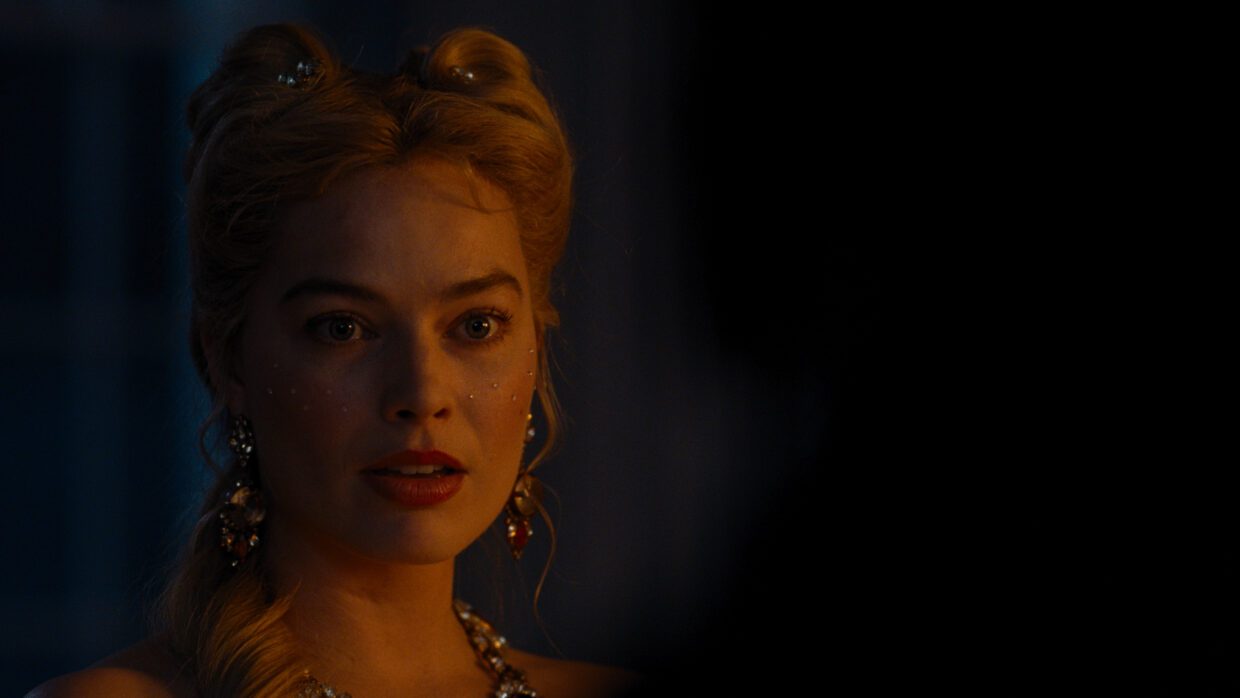
I guess at the time, even though I’ve been a hairdresser of donkey’s years, I never saw them as kind of victory rolls because, of course, I was putting them with horseshoe braids at the back and then sort of waves and rolls and, and, you know, certainly in the smaller version, a love lock.
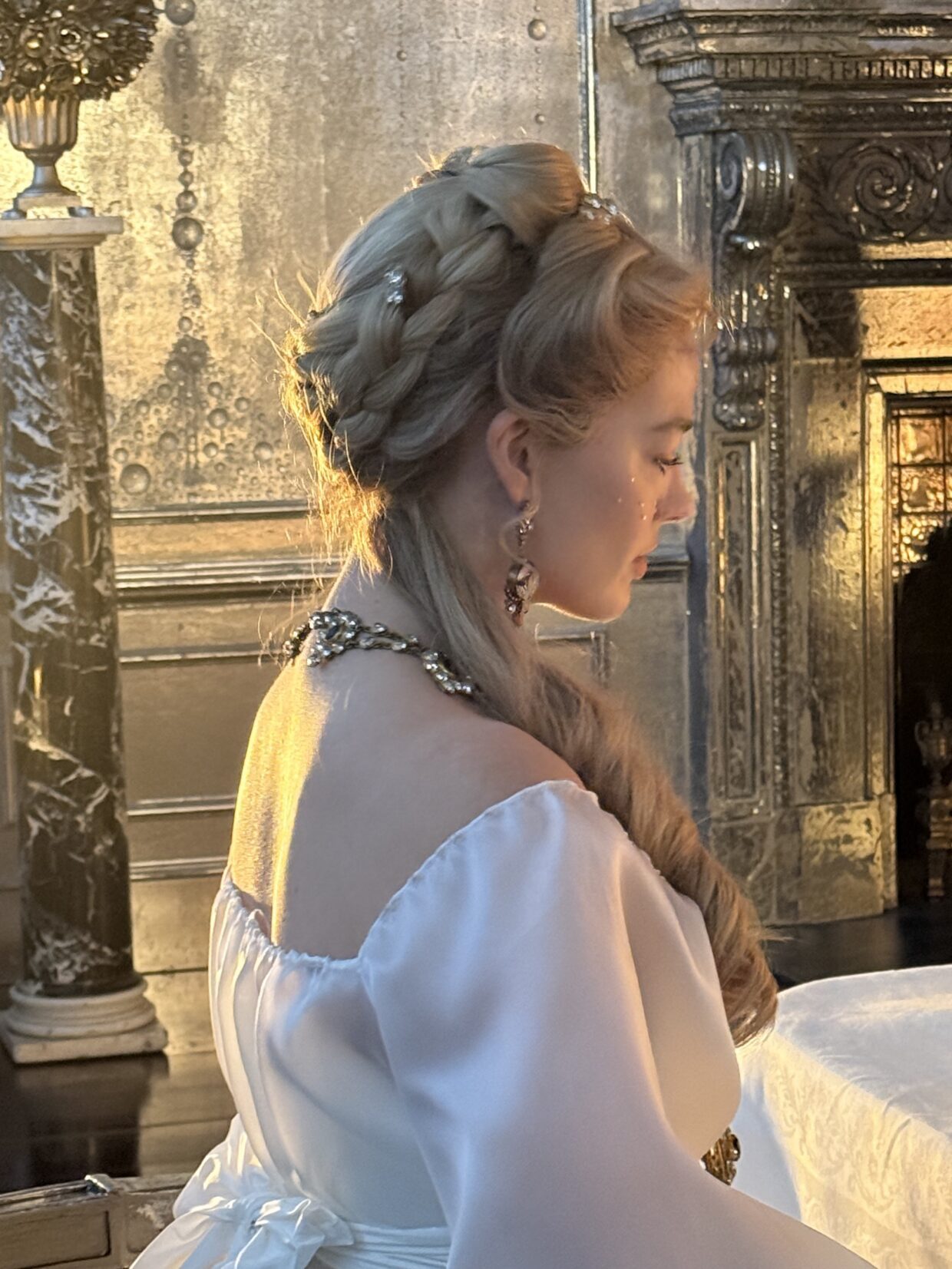
It really was a kind of a cherry picking of anything and everything, but to suit. And I think that’s what hairdressing is, right? You know, hairdressing is, whether you’re in the high street, it’s runway, it’s editorial, it’s, it’s a constant kind of reimagining of so much inspiration. And I think hairdressers will always do that. Hairdressing is sculptural at the end of the day. That’s what it is. And that’s really what encouraged me to do it.
Having been the fine art student originally and then and then onto interior design and architecture, you know, a very three dimensional, student of three dimensions. And hair is, nonetheless, exactly the same. And I think it’s misunderstood for that, and the appreciation of what it can do and the effect it can have. Not in this film. I think it’s very appreciated in this film. And it’s such a wonderful tool of self-expression. It’s a wonderful way of developing a story arc with a character helping to tell, you know, take us through the narrative.
It’s such a treat because in this film, hair is very central as opposed to other projects where it’s there and yeah.
Siân Miller: Which is frustrating to hairdressers because, of course, we, you and I both know that it’s all, it’s so fundamental to how, it says so much about somebody. And of course, you and I both know that everyone’s a hairdresser. But of course, they’re not. And of course, we’re much misunderstood. It is an art and it is a craft, undeniably. And to have the opportunity on a film like this where it really takes a center part of the stage and in the narrative, and is literally scripted. It was wonderful, wonderful opportunity.
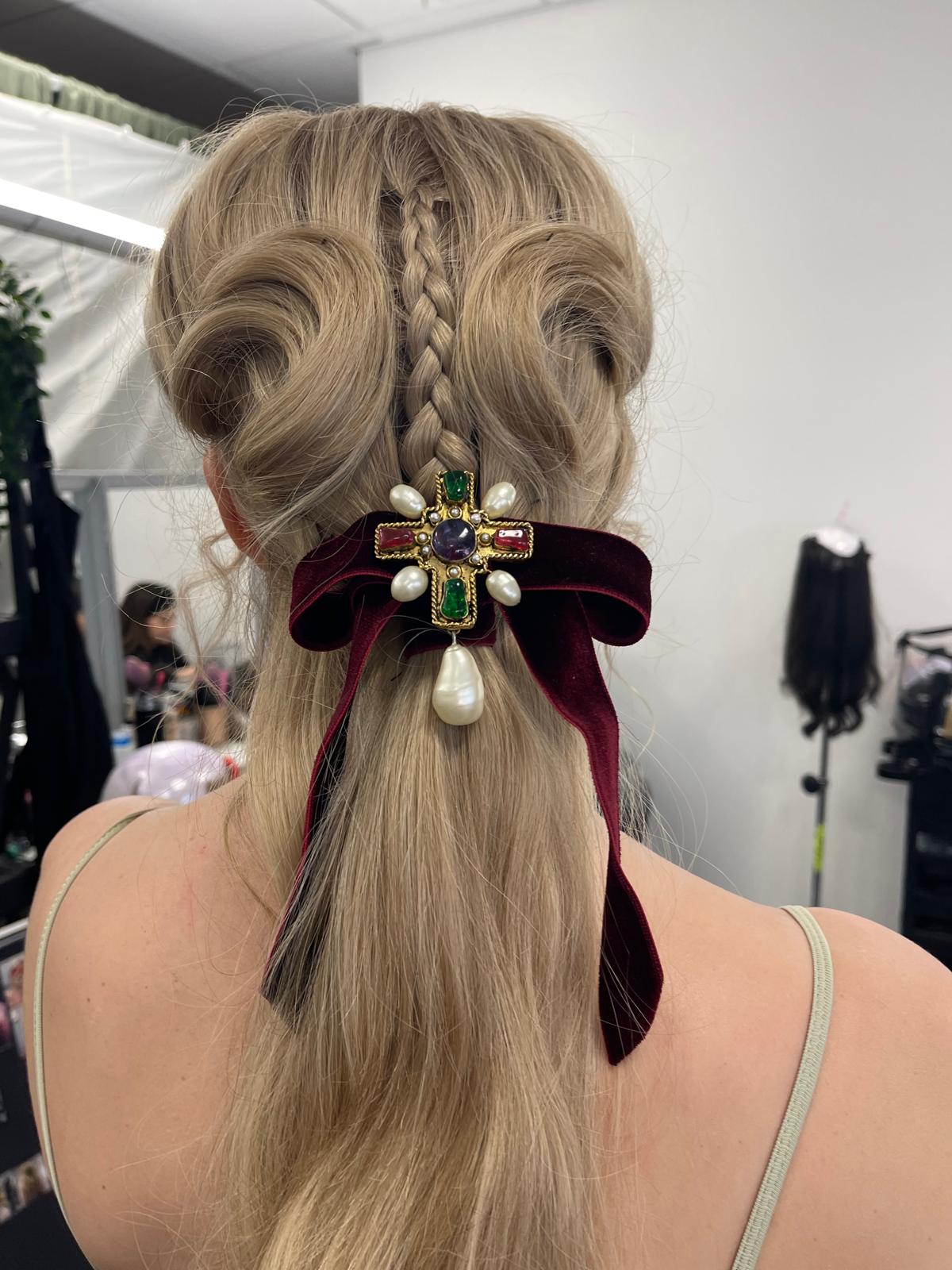
To that end, I mean, you mentioned this. So much of hairdressing is the sort of borrowing, the cherry picking from different references. ‘Wuthering Heights’ now, this film, is becoming a reference. And we’re seeing this increasingly in the romance hair trend. New York Fashion Week, very influenced by, I would say, the film, particularly the embellishments, the ornamentation. How does it feel to see, like, the immediate translation of your work?
Siân Miller: It’s incredible. It’s incredible. I was asked in an interview I did a few weeks ago what I thought might be, you know, what would be the most mimicked. And I’d said, well, maybe the corset braid, and I think I’d seen one of them. I mean, now I’ve been sent, my DMs are full of people that have found the most fantastic versions And it’s super exciting. But that’s what’s great about Emerald Fennell. She is so in touch with the kind of the zeitgeist. She’s very good at tapping in and she’s very good at inventing and encourages us all to do so and creating something that people aspire to be kind of a part of, and they want to kind of, like, live that in their own life.
What’s your favorite look? When you’re reflecting on the filming, and there are so many of these looks, what sticks out to you?
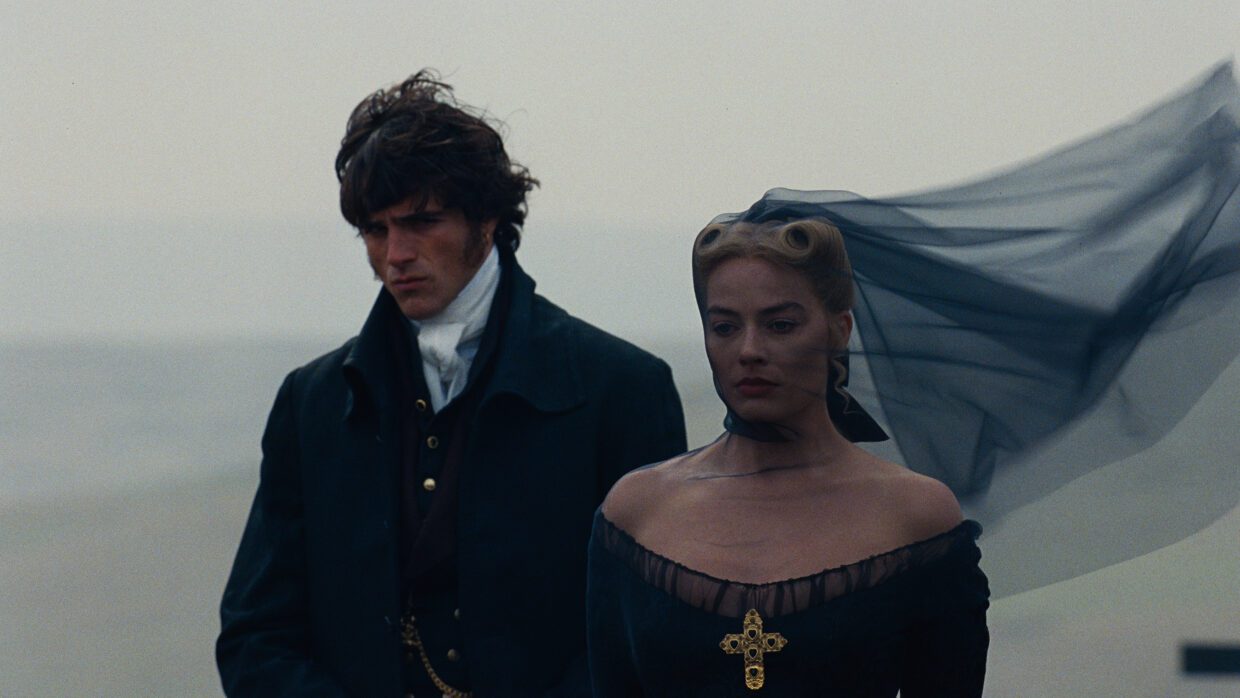
Siân Miller: Oh, Gosh, there’s so many. I mean, I love the simplicity of the wedding hair, and you can actually see it in the IMAX through the veil.
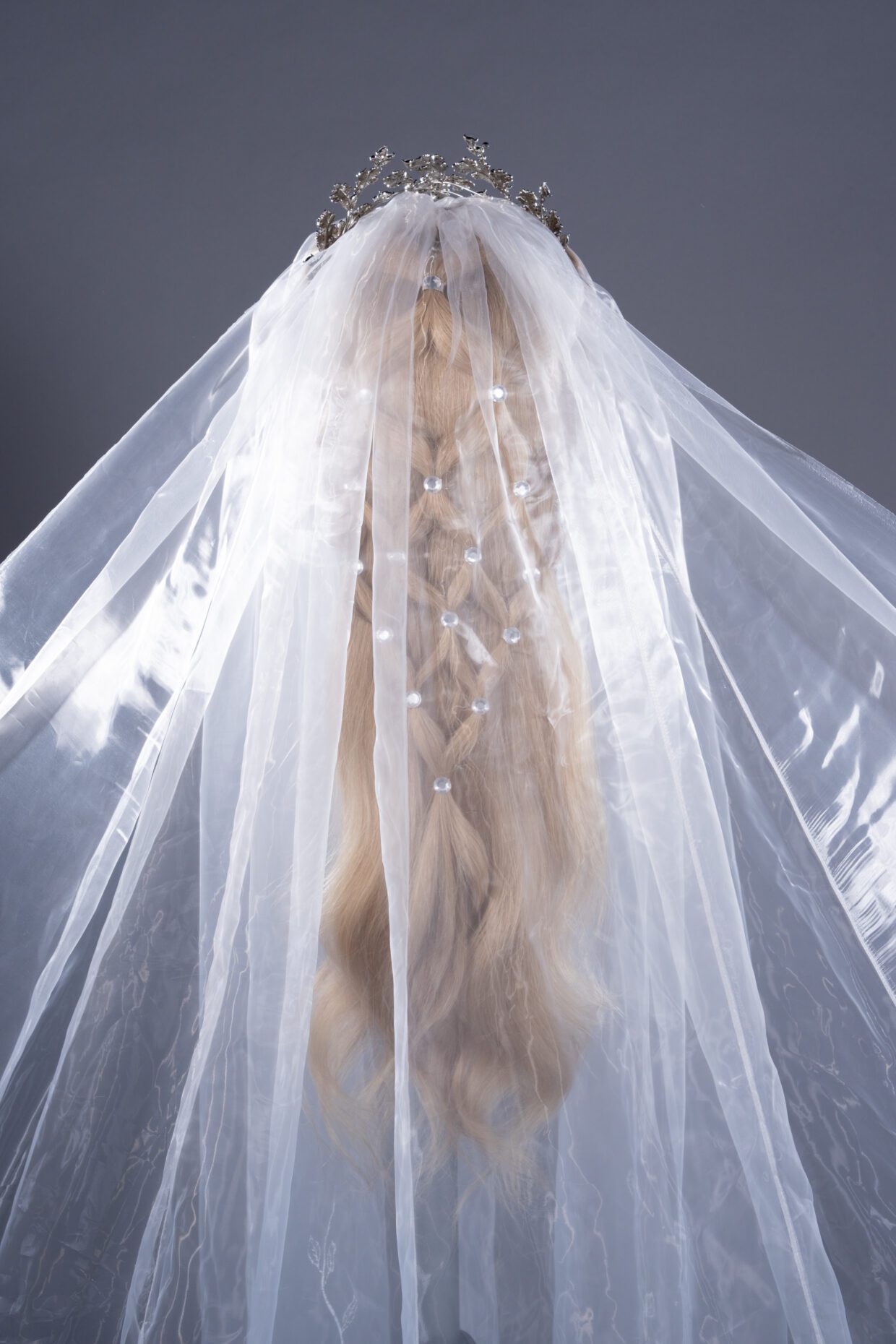
I saw it. It’s incredible!
Siân Miller: I do love that. I do love the love lock over the shoulder and the beautiful horseshoe braids. And I love the vagina braid, as we’re calling it, which is in the scene when they fight in the library or the lounge, whatever it’s called.
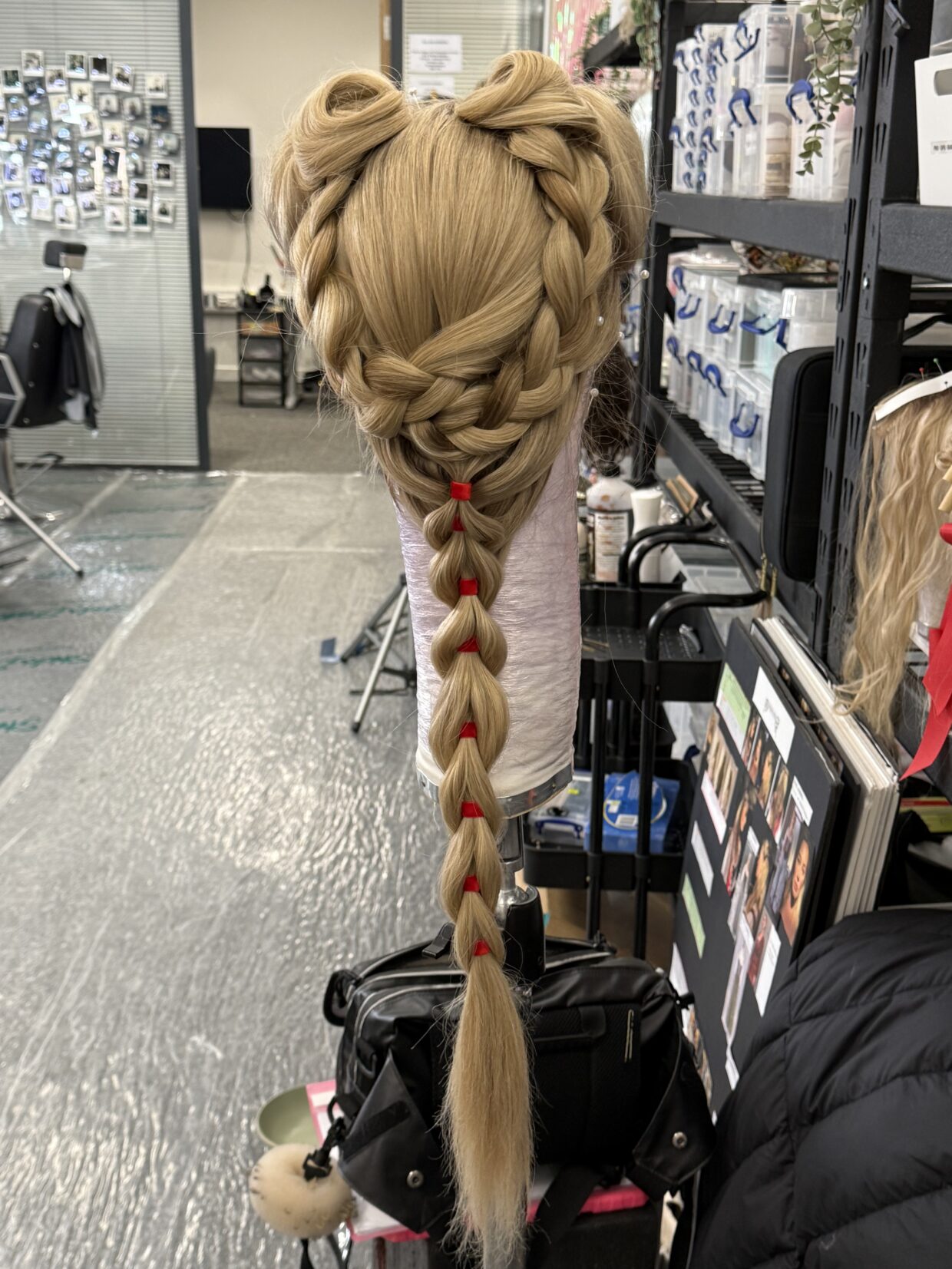
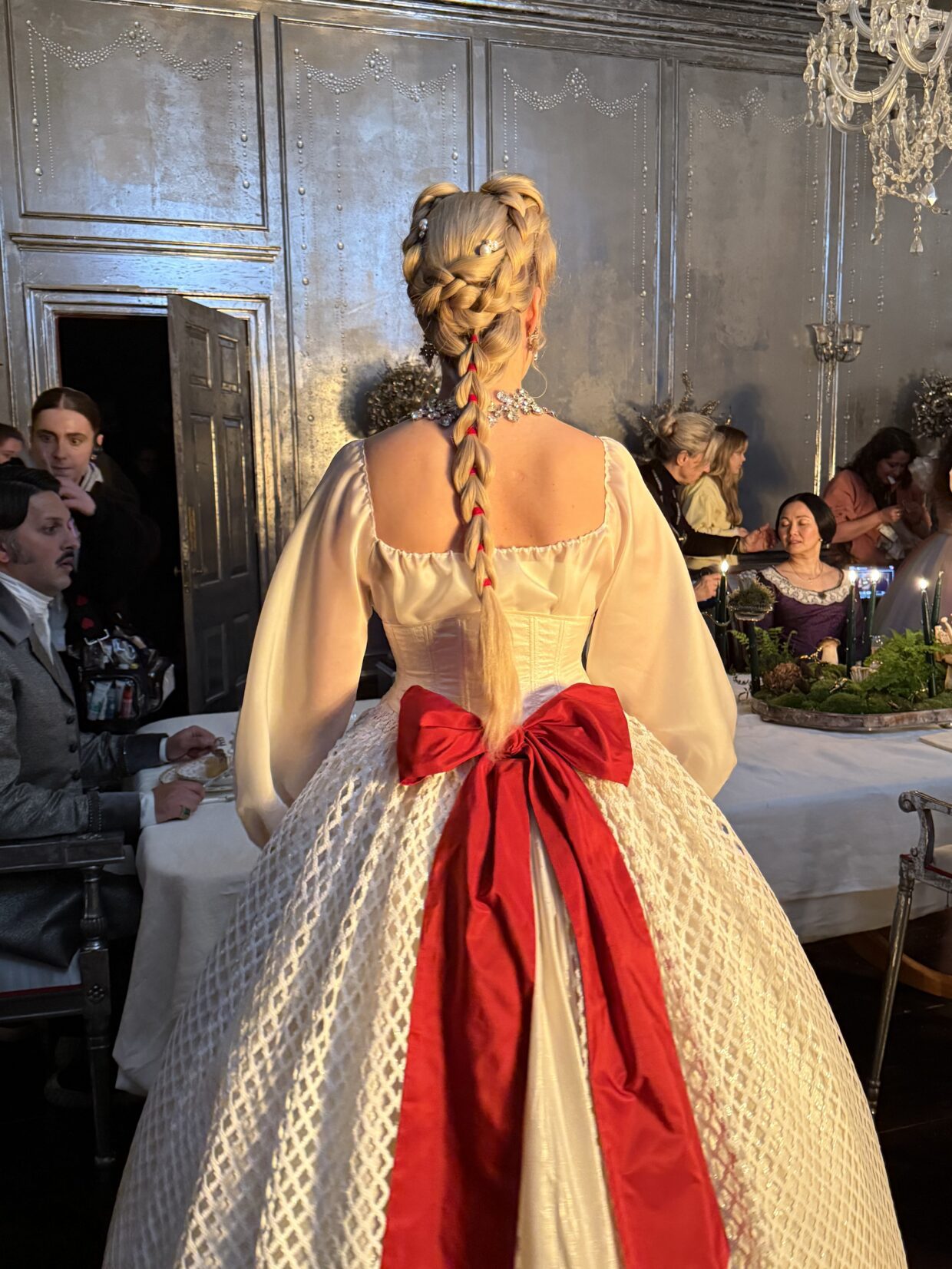
If I had to pick one, I’m probably going back to the corset braid because I just love the picture. She’s sat there, and it’s behind Cathy’s head, in the dining room, and Isabella brought her the doll’s house. It’s such a great shot.
Bit of a 180. Obviously a tragic end. Talk to me about the scenes in which Margot is passing away. Cathy is dying. And then later Heathcliff comes to her and she’s dead. I mean, she’s fully gray. Like, all of the color is just sucked out. In terms of makeup and hair, how was this accomplished? It’s really such a contrast to where we were.
Siân Miller: What we did, Emerald was very keen that it is a very stylized death, but that her skin would look like wet concrete. And that’s really where that comes from. And then with the hair, we reverted back to her own hair with a back piece. And I, it’s a quite a convenient tool for filming, I said to Sally Northwood, the colorist, let’s just put a tiny bit of root smudge in here. Because the moment you’re taking blonde to the roots and you’re getting that regrowth, it’s just a mare. When you’re naturally blonde, your ends are going to be lighter. There’s a little bit of the root smudge in there, but we allowed that to go. So what with that, and not washing her hair… Margot was very gracious, didn’t wash her hair. She’s such a brilliant collaborator. We were able to just, we call it ‘clatched’ in the UK. I don’t know why, maybe I’ve made that word up. But, tight to the head and kind of greasy and lackluster. It’s just got a lifeless, it’s lost its life as she’s losing her life. That’s kind of how we approached that.
So much of the film is visually stunning, but that sequence, given sort of where we were earlier in the film, it’s just such an insane sort of evolution for the eyes.
Siân Miller: And that was all hands on deck. I mean, we had people with brushes at every single which way, and then the sepsis as well. Nana Fischer, who’s [Margot Robbie’s] personal hair and makeup artist, you know, was very gracious because, you know, we all had to get involved.
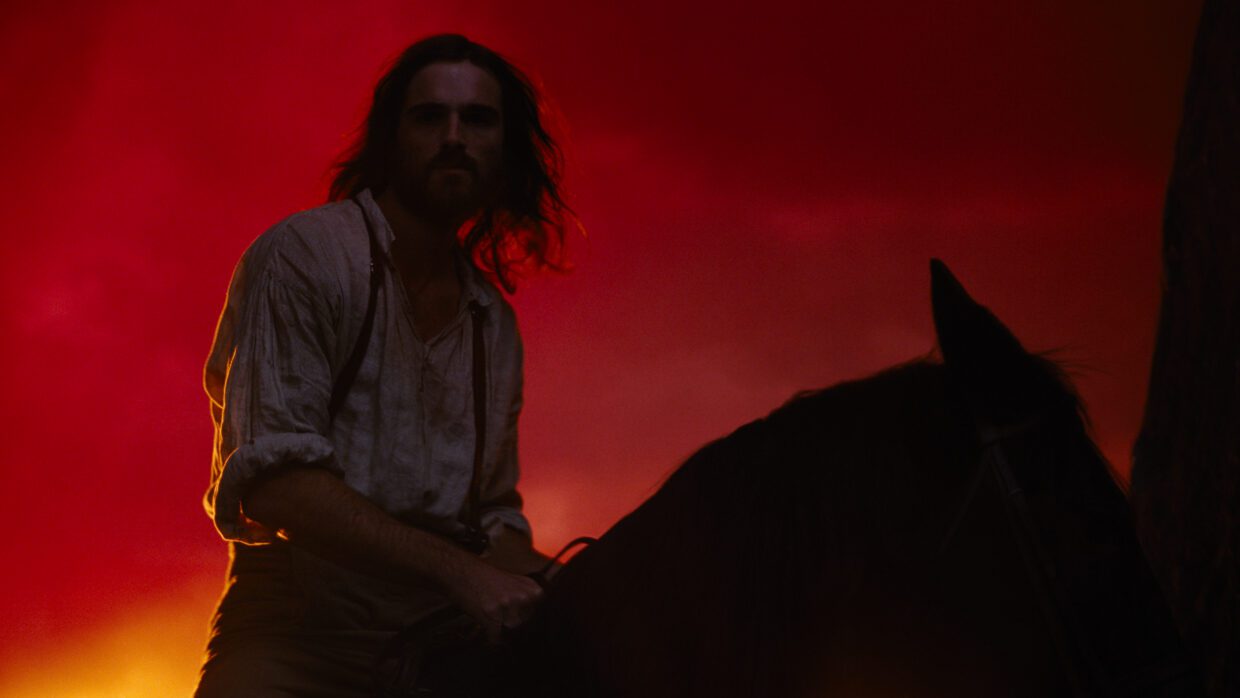
Pivoting a little bit to Jacob. I’ve read that he’s got a false beard at times, continuity and these things. We understand that happens. But were the mutton chops false or were they real?
Siân Miller: They are all his own. I mean, Jacob grows a wonderful beard. When I first saw him fairly early on, before we started filming to get the wig measurements with the wigmaker, I said just grow everything. I think he started anyway and then, of course, when he returned, he had this incredible beard. And we were blown away by it. We weren’t quite expecting that. I’ve never seen Jacob with a beard. I’ve seen him with a variation of sideburns on ‘Saltburn’ and that was wonderful.
We knew that within the schedule shooting, in as much as we could, in a story order, but of course we knew that once we did some of the Wuthering Heights sequences at the beginning of the film on location that we were going to have to go back. And in order to keep the beard, and not lose the beard from the beginning of the film, and Emerald was keen to do so. We both were. It was a case of convincing Emerald that we can do this and you can shoot an enormous close up and put it in the biggest screen in the world and it’ll be spot on. And that’s where I’d worked with, hats off to, Roberto Pastore, who’s so worth of mention.
I would never have, If I hadn’t seen you posting about it, I would have never known.
Siân Miller: I convinced production that he was the guy, and they said, well, you could do it. And I said, well, no, I can do it, but I’m not as good as him. I don’t mind admitting. And I’m certainly not as fast, although I did have to do the test. With one of my colleagues. And they put the stand-in, I did it on in front of a water cannon and a wind machine. Just because this is what we thought we would get in Yorkshire. And of course, I’m like, please stay on please, because I really wanted to show this trick because I knew that if we could do this and then see Heathcliff come back and appear through the fog. I mean, one of the screenings I went to, the audience cheered.
Fortunately it worked. And yeah, it was for a handful of scenes. And even my team had forgotten. I just don’t think you can see. Because it’s also hard to know when we’re shooting on the soundstage and when we’re out there. And I think that’s what it’s, you know, it’s so nice to have illusion as well, and not to shatter all that. I think the mystery is good. He’s a master!
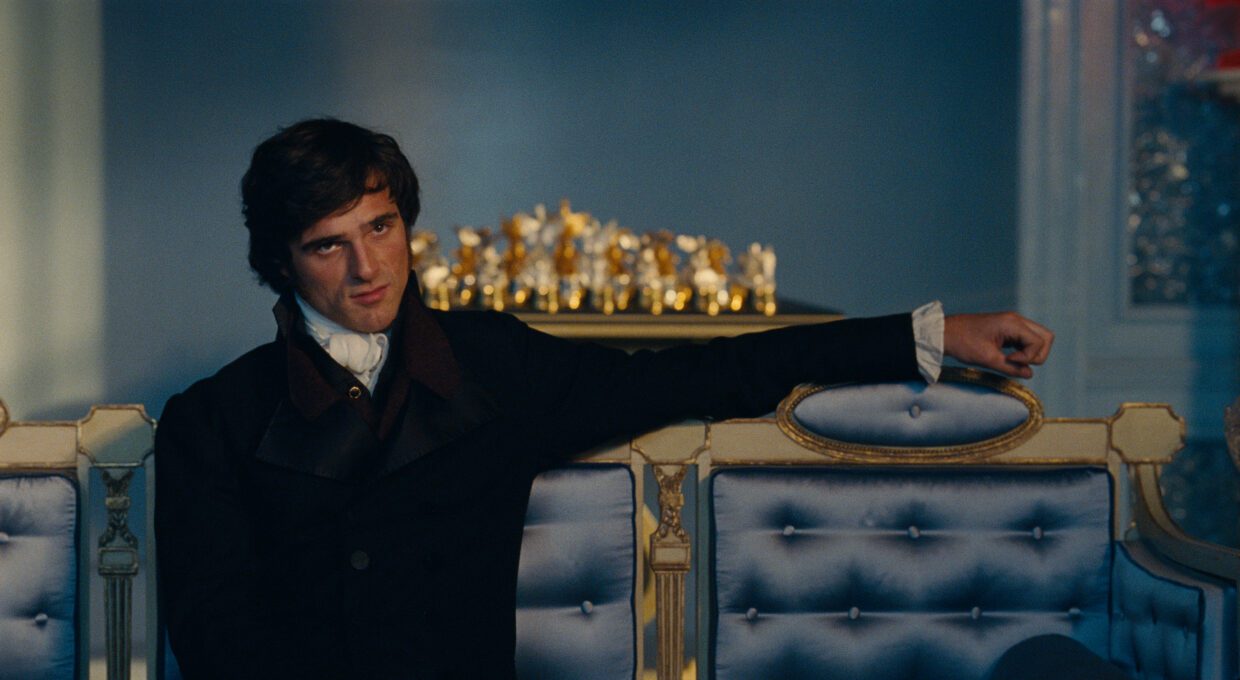
Another masterful thing, the Mr. Darcy-esque chop that Jacob’s got. Tell me about that if you could.
Siân Miller: So I, as I cut his hair on, ‘Saltburn,’ I cut his hair. And he’s got great hair. What works really well with him is AVEDA confixor as my base. I love the product. I’ve been using it for about 30 years. It just works with him. So, AVEDA Confixor. And then Wella EIMI, they do a really good mousse for textured hair. And AVEDA Be Curly cream. The process wasn’t ready without it. So I’d diffuse, and a bit of scrunching and teasing. And then I’d kind of do another little layer of the EIMI, because it’s a great mousse for not crunch and not stiffness, but just giving me a bit more guts. Because his hair needs, it definitely needs all this to get there. And then, it’s one of my favorite products, it’s very pricey, but I absolutely love it. Then I’d, occasionally I’d break it down with kind of maybe the Oribe kind of clays or something similar. But then the Oribe Dry Texturizing Spray dusted through just helped it. I love that stuff. I just love it. I love the smell. I love the product. It’s bougie. It’s lovely, but it’s really good. It’s really good.
But I still use a lot of the AVEDA. I love the AVEDA Control Paste. I love the AVEDA Grooming Cream. I think they sort of overall compared to a lot of other products over the years, they don’t seem to messed up the formula too much. I was at a salon the other day and they were talking about brands that have changed, products that change a formula, but they seem to be still quite true to it.
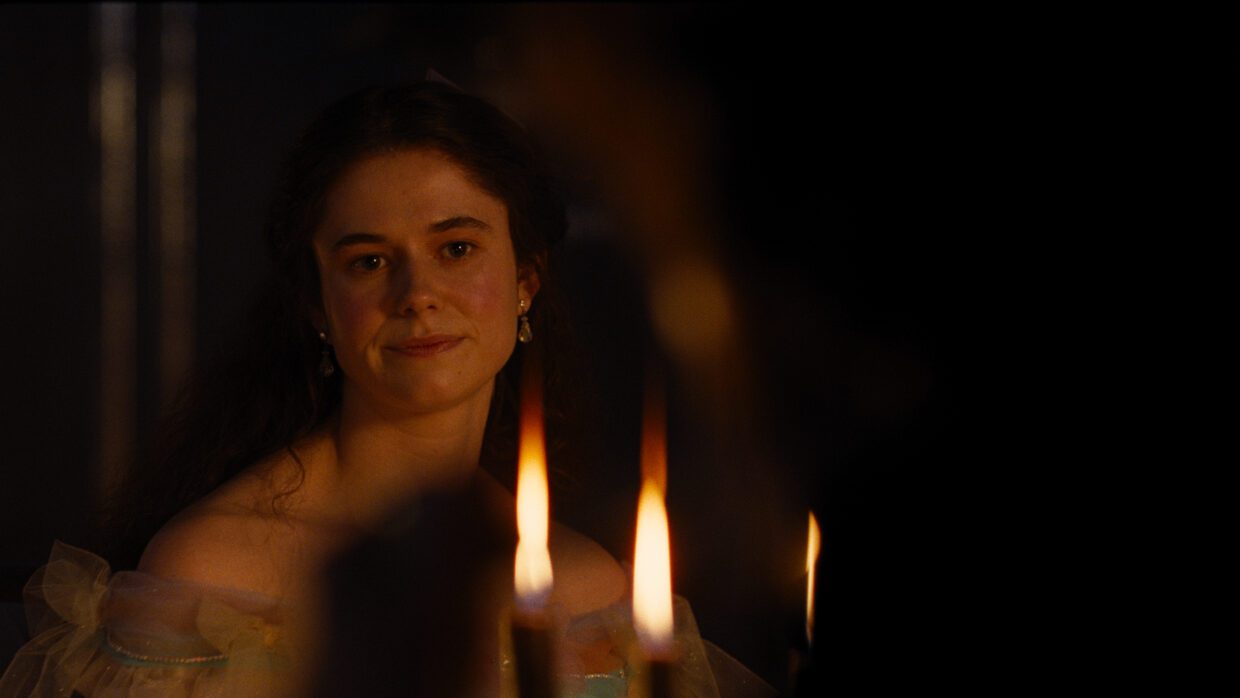
One minute and then I’m going to let you go. Isabella, Alison Oliver, I’ve seen the press in which she talks about her hair catching on fire. I would imagine that was horrifying, particularly for the hair team. You mentioned hero multiple wigs for Margo. How many wigs were in play for her to sort of swap in?
Siân Miller: We just had the one wig. Just the one. Fortunately, to look kind of wild and a bit unkempt.
So that room was quite tight. We were just off the room watching a monitor around the corner and heard some screams and of course went and then I think heroically Jacob had put it out with his hand. And I think she’d been brushing her hair and flipped around and, of course, hair as we know, apart from the smell, you’d never know. It kind of probably added to the whole the texture quite nicely. Just the one wig beautifully looked after by her makeup artist Cheryl Mitchell.
“Wuthering Heights” is in theaters now. For more from Siân Miller, be sure to follow her on Instagram.